Chrysalidocarpus madagascariensis
<google>CH02</google>

| Dypsis (DIP-sis) madagascariensis (mad'-ah-gas-kar'-ee-EN-sis) | |||||||
|---|---|---|---|---|---|---|---|
 Big Island, Hawaii. | |||||||
| Scientific Classification | |||||||
| |||||||
| Synonyms | |||||||
|
| |||||||
| Native Continent | |||||||
 | |||||||
| Morphology | |||||||
| |||||||
| Culture | |||||||
|
| |||||||
| Survivability index | |||||||
|
| |||||||
| Common names | |||||||
|
| |||||||
Contents
Habitat and Distribution
"Native to the forest of Lucuba (or Lokobe) on the island of Nossi-Bé, off the northwestern coast of Madagascar" (Staples & Herbst, 2005; p. 622).
Description
A solitary, or frequently clustering palm with a light green to grey stem, the pinnate leaves are arranged in vertical rows. The pinnae are arranged in two rows thus giving a fluffy appearance to the leaf. The fruit is 1.5 cm long, black at maturity.
"Solitary or clustering; trunk to 30 feet tall, gray. Fronds ±plumose, in loose, 3-sided spiral, without complete crownshaft; leaflets clustered, attached at different angles on rachis. Fruit 0.75 inches long, purplish, glaucous; endosperm plain" (Staples & Herbst, 2005; p. 622).
"Elegant solitary or clustering palm in tufts of 2-4. Trunk 2-18 m tall, 7-20 cm in diameter; internodes (0.5-) 5-12 cm long, green weathering to grey, nodal scars (0.2-) 1,5-2.5 cm; wood very hard because of an outer layer of tough fibres; crownshaft green, white-waxy, 8-20 cm in diameter. Leaves 7-12 in the crown, tristichous, correct and arching distally; sheath 75% to completely open in the outermost leaves, (27-) 40-63 cm (to 70 cm in young trees), adaxially orange, abaxially green with white waxy overlay, proximally glabrous, distally with scattered reddish scales, with irregular ligules varying from rounded shoulders to small but distinct triangular processes to 3.5 mm high, and sometimes ciliate with brown hairs; petiole 12-40 cm long (to 50 cm in young trees), 1.3-5 x 1.8-3.5 cm in diameter, channelled with sharp edges, abaxially with red-brown omentum but glabrescent, waxy; rachis 1.6-3.1 m long, proximally channeled, waxy and with vestiges of reddish pubescence, in mid-leaf keeled, 0.7-2 x 0.4-1.5 cm and glabrous or nearly so; leaflets (30-) 88-126 (-177) on each side of the rachis, in groups of 2-6, fanned within the groups, the groups 0.5-45 cm distant, the leaflets with their distal part drooping, the proximal 59-118 x 0.5-1.5 cm, the median 47-95 x 1.2-2.2 (-32) cm (interval within the groups 0.3-0.5 cm), the distal 5.5-39 x 0.5-1.8 (-2.6) cm, mid-green, abaxially waxy-pale green, main veins 1, the others very faint, proximally on the abaxial midrib with a few tufts of laciniate red-brown ramenta to 14 mm long, caducous in old leaves, otherwise glabrous or with scattered red glands on the minor veins, apices acute, unequally bifid. Inflorescence interfoliar, branched to 3 orders (rarely to 4 orders), 1-1.5 m long, c. 1 m wide, arching with spreading rachillae; peduncle 52-60 cm long, proximally 5-7 x 3-3.5 cm, distally 1.5-5 x 1-3 cm in diameter, reddish-tomentose to tomentellous but glabrescent and then green; prophyll 35-61 cm, borne at 3-6 cm above the base of the peduncle, 4-8 cm wide, coriaceous, densely pubescent to glabrous; peduncular bract inserted at 14-23 cm from the base of the peduncle, 53-81 cm long, closed for 3-9 cm distally, beaked for 3-.5 cm, white-waxy, with large laciniate reddish scales but glabrescent, abscising and carried upwards by the lengthening inflorescence; open peduncular bract about 1 cm high, 3.5 cm wide; rachis 62-96 cm long, with flaking reddish pubescence, with 5-22 branched and 8-9 unbranched first order branches, the proximal of these proximally 0.9-3 x 0.4-1.2 cm in diameter, subtended by a bract 0.5-1.8 (6.2) cm high; rachillae 10-40 cm, 2-4 mm in diameter, green with some traces of reddish scales, with distant to quite densely set triads in shallow pits. Saminate flowers yellow-greeen with sepals 1.5-1.6 x 1.3-1.8 mm, keeled, basally gibbous, membranous apart from the keel, hooded distally; petals connate to the receptacle for 0.6-1.2 mm, the free lobes 1.8-2.3 x 2-2.4 mm, ovate, acute, proximally on the adaxial side with a swelling on each side of the filament insertion; stamens 6, in 1 series, though the antepetalous slightly wideer at the base, filaments connate at the base for 0.3-0.4 mm, 2.2-2.7 mm long, anthers 1.5-1.7 x 0.6-0.7 mm, dorsifixed, versatile; pistillode columnar, 1.3-2.3 x 0.9-1 mm. Pistillat flowers with sepals 1.9-2.3 x 1.8-2.4 mm, orbicular, concave, apiculate, not membranous; petals connate with the receptacle for 0.4 mm, 2.3-2.5 x 1.8-2.8 mm, orbicular, concave, apiculate; staminodes 0.3-0.4 mm, flat dentiform; ovary 2.3-2.8 mm high, asymmetrical, 1.9-2.2 mm in diameter. Fruit green turning purplish with waxy bloom, slightly obovoid or ellipsoid, 10-16 x 5-10 mm, pointed at the base or rounded at both base and apex. Seed narrowly ellipsoid, pointed at base, rounded at apex, 9-12 x 5-6 mm, endosperm homogeneous. Eophyll bifid" (Dansfield and Beenje, 1995). Editing by edric.
Culture
Habitat/ecology: "Tolerant of dry conditions but appreciates deep, rich soil, plenty of water, and full to filtered sun. It can tolerate some salt exposure" (Staples & Herbst, 2005; p. 622).
Propagation: Seed. "The small fleshy fruits (about 1 cm in diameter) might be dispersed over long distances by frugivorous birds" (Meyer, Lavergne & Hodel, 2008; p. 75).
Comments and Curiosities
External Links
References
Phonetic spelling of Latin names by edric.
Special thanks to Geoff Stein, (Palmbob) for his hundreds of photos, edric.
Special thanks to palmweb.org, Dr. John Dransfield, Dr. Bill Baker & team, for their volumes of information and photos, edric.
- IMAGE GALLERY


Ho'omaluhia, Hawaii.

Big Island, Hawaii.

Hawaii.

Grouping, Hawaii.

Madagascar. Photo by Justin, edric.

Herminio Garden, Braztl, photo by Paul Craft, edric.

Gold Coast Hinterland, Queensland. Photo by Daryl O'Connor, edric.

At Daryl O'Connors, Gold Coast Hinterland, Queensland Australia. Photo by Wal, edric.

Madagascar. Photo by Dr. Charles Rakotovao, edric.
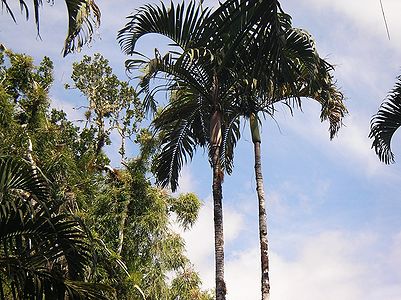
Madagascar. Photo by Dr. Charles Rakotovao, edric.
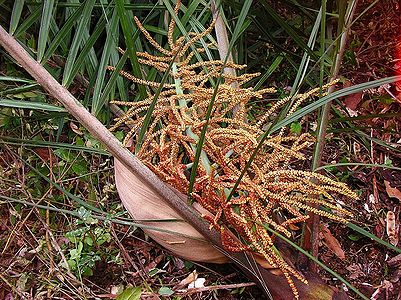
Madagascar. Photo by Dr. Charles Rakotovao, edric.

Madagascar. Photo by Dr. Charles Rakotovao, edric.

Fairchild Botanical Garden, FL. Photo by Dr. John Dransfield, edric.

Fairchild Botanical Garden, FL. Photo by Dr. John Dransfield, edric.

Fairchild Botanical Garden, FL. Photo by Dr. John Dransfield, edric.

Dypsis madagascariensis in south FL

Dypsis madagascariensis in south FL
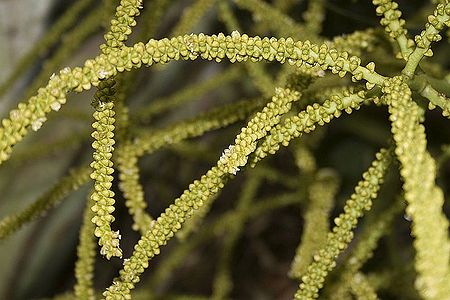
Ambanja, commune Beramanja. Bas de crête, Madagascar. Photo by Dr. Martin Callmander, edric.
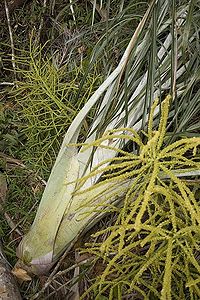
Ambanja, commune Beramanja. Bas de crête, Madagascar. Photo by Dr. Martin Callmander, edric.

Ambanja, commune Beramanja. Bas de crête, Madagascar. Photo by Dr. Martin Callmander, edric.
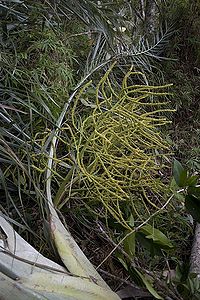
Ambanja, commune Beramanja. Bas de crête, Madagascar. Photo by Dr. Martin Callmander, edric.


Many Special Thanks to Ed Vaile for his long hours of tireless editing and numerous contributions.