Calamus ciliaris
<google>CH02</google>

| Calamus (KAL-ah-mus) ciliaris (sil-ee-AHR-iss) | |||||||
|---|---|---|---|---|---|---|---|
 | |||||||
| Scientific Classification | |||||||
| |||||||
| Synonyms | |||||||
|
| |||||||
| Native Continent | |||||||
 | |||||||
| Morphology | |||||||
| |||||||
| Culture | |||||||
|
| |||||||
| Survivability index | |||||||
|
| |||||||
| Common names | |||||||
|
| |||||||
Contents
Habitat and Distribution
Endemic to Java, Sumatera,
Description
One of the smaller Calamus., clustering, non-climbing, pinnate.
Culture
Calamus ciliaris, prefers a half schady site and can withstand temperatures only above 1,2º C. It grows best in sandy or pebbly, loamy soil, sandy clay soil that is moist.
Comments and Curiosities
Calamus uses - Its slender and cylindrical stem, properly worked, is the source of the well known rattan, a valuable and expensive material, much appreciated for the making of furniture, walking-sticks, umbrellas and wickerwork. However, similar products are often made out of stems of many other plants, mostly Gramineae (particularly Bamboos), Juncaceae (rushes) or, finally, out of tender and slender branches of willows (wicker).
External Links
References
Phonetic spelling of Latin names by edric.
Special thanks to Geoff Stein, (Palmbob) for his hundreds of photos, edric.
Special thanks to palmweb.org, Dr. John Dransfield, Dr. Bill Baker & team, for their volumes of information and photos, edric.
- IMAGE GALLERY
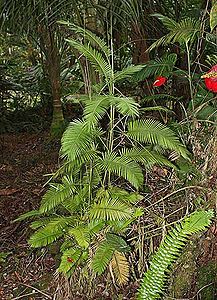
Andersen Garden, Hawaii, photo by Paul Craft, edric.


Many Special Thanks to Ed Vaile for his long hours of tireless editing and numerous contributions.