Salacca glabrescens
| Salacca (SAH-lahk-kah) glabrescens (glah-BRES-senz) | |||||||
|---|---|---|---|---|---|---|---|
 Photo: Malaysian Biological Diversity. | |||||||
| Scientific Classification | |||||||
| |||||||
| Synonyms | |||||||
|
| |||||||
| Native Continent | |||||||
 | |||||||
| Morphology | |||||||
| |||||||
| Culture | |||||||
|
| |||||||
| Survivability index | |||||||
|
| |||||||
| Common names | |||||||
|
| |||||||
Contents
Habitat and Distribution
Malaya, Thailand.
Description
This Salak palm is native to lowland rainforests on the Malay Peninsula to 700 m (2300 ft.). It forms a densely clustering, usually underground stem that gives rise to many tall, ascending, plumose leaves with narrow, clustering leaflets and spiny leaf bases. The large, pear-shaped fruits are covered in snakeskin-like scales and are a sought-after delicacy. In cultivation it does best in a tropical climate under an established canopy. (RPS.com)
Culture
Cold Hardiness Zone: 10a
Comments and Curiosities
- IMAGE GALLERY
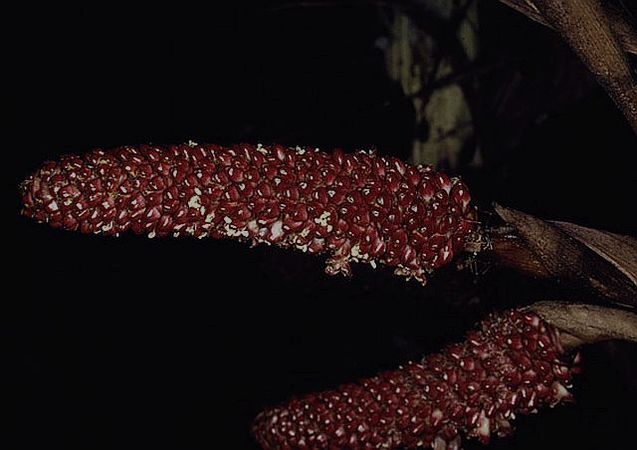
Frim, Malaysia. Photo by Dr. William J. Baker, Royal Botanic Gardens, Kew/Palmweb.

Frim, Malaysia. Photo by Dr. William J. Baker, Royal Botanic Gardens, Kew/Palmweb.

Kampong Kenigain, Pahang, Malaysia. Photo by Dr. John Dransfield, Royal Botanic Gardens, Kew/Palmweb.


Nong Nooch Tropical Botanical Gardens, Thailand. Photo by Paul Craft.

Nong Nooch Tropical Botanical Gardens, Thailand. Photo by Paul Craft.

Nong Nooch Tropical Botanical Gardens, Thailand. Photo by Paul Craft.


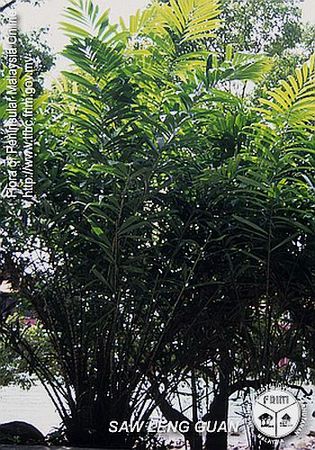
Photo: Malaysian Biological Diversity.

Photo: Malaysian Biological Diversity.

Photo: Malaysian Biological Diversity.

Photo: Malaysian Biological Diversity.


External Links
References
Phonetic spelling of Latin names by edric.
Special thanks to Geoff Stein, (Palmbob) for his hundreds of photos.
Special thanks to Palmweb.org, Dr. John Dransfield, Dr. Bill Baker & team, for their volumes of information and photos.
Glossary of Palm Terms; Based on the glossary in Dransfield, J., N.W. Uhl, C.B. Asmussen-Lange, W.J. Baker, M.M. Harley & C.E. Lewis. 2008. Genera Palmarum - Evolution and Classification of the Palms. Royal Botanic Gardens, Kew. All images copyright of the artists and photographers (see images for credits).
Many Special Thanks to Ed Vaile for his long hours of tireless editing and numerous contributions.