Difference between revisions of "Areca catechu"
Dypsisdean (Talk | contribs) |
|||
| (106 intermediate revisions by 3 users not shown) | |||
| Line 1: | Line 1: | ||
| − | [[Image:Areca catech alba.JPG | + | __noeditsection__ |
| − | + | {{Palmbox | |
| − | [[ | + | |image=Areca CATECHU DWARF NN.jpg |
| + | |image_caption=Dwarf. Nong Nooch Tropical Garden, Thailand. | ||
| + | |genus=Areca (ah-REHK-ah) | ||
| + | |species=<br>catechu (kah-TEH-koo) | ||
| + | |subspecies= | ||
| + | |cultivar= | ||
| + | |synonyms= | ||
| + | |continent=asia | ||
| + | |habit=Solitary | ||
| + | |leaf_type=Pinnate | ||
| + | |height= | ||
| + | |trunk_diameter= | ||
| + | |sun_exposure= | ||
| + | |watering= | ||
| + | |soil_type= | ||
| + | |msi= | ||
| + | |common_names= (Filipino: bunga, Malay: pinang, Malayalam: adakka), | ||
| + | }} | ||
| + | ==Habitat and Distribution== | ||
| + | ''Areca catechu'' is found in Bangladesh, Bismarck Archipelago, Cambodia, [[image:-gallery-members-areca_catechu_dwarf_craftz.jpg|thumb|left|500px|"Dwarf", Marcus Garden, Hawaii, photo by Paul Craft.]]Caroline Is., China South-Central, Fiji, Hainan, India, Laos, Malaya, Marianas, New Guinea, Philippines, Society Is., Solomon Is., Sri Lanka, Sulawesi, Taiwan, Thailand, Vanuatu, and Vietnam. | ||
| + | ==Description== | ||
| + | Reaching 60 feet (20 meter) tall; trunk diameter is 8 - 12 inch (20 – 30 cm). Trunk: solitary, slender and erect. Origin: Indonesia, but now also growing in Suriname. Leaf: up to 7' long, broad leaflets, the tips being jagged. Flower stalk: whitish; sweet scented; from below the crown shaft on a branching spadix. Fruit: orange-yellow when ripe, to 2.5 inch long (betel nuts). It has a fleshy pericarp and fibrous mesocarp. Seed: Areca catechu is grown for the important seed crop, the Betel nut. The nut itself is brown, oval and flattened at one end. Editing by edric. | ||
| + | ==Culture== | ||
| + | An easily grown palm for both the tropics and warm sub-tropical areas (it is cold sensitive). It prefers shade as a seedling, but it does take full sun at quite a young age. It likes a moist, well drained soil, and doesn't like to dry out. | ||
| + | ==Comments and Curiosities== | ||
| + | The fruit flesh on the seed has psychoactive properties (stimulating effects) and in South-east Asia is used as such by chewing on the fruit. It produces euphoria, heightened alertness, sweating, salivation, a hot sensation in the body and an increased capacity to work. The alkaloid arecoline found in the nut, accounts for these effects. However there may be undesirable side effects associated with chewing on the fruit such as an increase in heart rate, blood pressure, sweating and body temperature. Betel chewing also increases plasma concentrations of norepinephrine and epinephrine. The Betelnut is also used as an offering in Hinduism. | ||
| + | {{read more top}} | ||
| + | Areca catechu is grown for its commercially important seed crop, the areca nut. This palm is often erroneously called the betel tree because its fruit, the areca nut, is often chewed along with the betel leaf, a leaf from a vine of the Piperaceae family. The seed contains alkaloids such as arecaidine and arecoline, which, when chewed, are intoxicating and slightly addictive. grown primarily for their seeds, the seed also contains condensed tannins (procyanidins) called arecatannins. The areca palm is also used as an interior landscaping species. It is often used in large indoor areas such as malls and hotels. It will not fruit or reach full size. Indoors, it is a slow growing, low water, high light plant that is sensitive to spider mites and occasionally mealybugs. The areca nut is also popular for chewing throughout some Asian countries, such as Taiwan, Vietnam, Philippine, Malaysia, and India and the Pacific, notably Papua New Guinea, where it is very popular. Chewing areca nut is quite popular among working classes in Taiwan. The nut itself can be addictive and has direct link to mouth cancers. Areca nuts in Taiwan will usually contain artificial additives such as limestone powder. The extract of Areca catechu has been shown to have antidepressant properties in rodents, but it is known to be highly addictive. | ||
| + | |||
| + | Betel nut (Areca catechu) is chewed regularly by at least 10% of the world population, imported by immigrant users wherever they settle, and is the fourth most widely used addictive substance. It is thought, by users, to soothe the digestion and to be a stimulant and its use has a major role in social situations. Specific arecal alkaloids act as competitive inhibitors of GABA receptors and have widespread effects in the body, including actions on the brain, cardiovascular system, lungs, gut and pancreas. Nitrosated derivatives of arecal alkaloids, proven carcinogens inducing tumours throughout the upper gut and foregut derivatives in animals, are also associated with increased tumour risks in man. These nitrosated compounds are also diabetogenic in CD1 mice, producing a type 2 diabetes with obesity. Increased central obesity is found in association with betel usage in man as well as increases in circulating markers of inflammatory and cardiovascular damage. The effects of chronic betel usage in man are at least as diverse as those of smoking and the habit increases the risks of ill health. | ||
| + | |||
| + | "Apparently, most seeds from a dwarf Areca catechu will NOT produce dwarfs. I have talked a few times with Roy at H. Eunice Nursery in Hilo about this. My guess is that Roy has germinated more of these than most of us. And his experience is that the seeds from a dwarf will produce everything ranging from true dwarfs to the standard tall betel nut and everything in between. And you can't really tell what it will end up being until the plant is about 1 ft to 1.5 ft tall." (BGL) | ||
| + | |||
| + | "We have many A. catchu in our garden. there is a variety called 'bathali' it produce large seeds, almost three times larger than normal". (Ahamed, Sri lanka) | ||
| + | {{read more bottom}} | ||
| + | |||
| + | <br clear="all"> | ||
| + | {{#Widget:AdResban}} | ||
| + | <center><gallery caption="IMAGE GALLERY" perrow="" widths="" heights=""> | ||
| + | Image:Areca catechus Ho.jpg|Ho'omaluhia, Hawaii. | ||
| + | Image:Areca catechu again.jpg|[http://www.hawaii.edu/lyonarboretum/ Lyon Arboretum | ||
| + | Image:Areca catech alba.JPG|"Alba" | ||
| + | Image:ARECa CATECHU ALBA SBG.jpg|[http://www.sbg.org.sg/ Singapore Botanic Gardens. | ||
| + | Image:Areca CATECHU CROWN NN.jpg|[http://www.nongnoochtropicalgarden.com/en/index.asp Nong Nooch], Thailand. | ||
| + | Image:Areca CATECHU DWARF NN.jpg|Dwarf. Nong Nooch Tropical Garden, Thailand. | ||
| + | Image:Areca catechu stumpy and me CMz.jpg|Geoff Stein for Scale. | ||
| + | Image:Areca catechu street planting Singapore.jpg|Singapore. | ||
| + | Image:Areca catechu Thailand.jpg|Thailand. | ||
| + | image:8769-166.jpg | ||
| + | image:Arc0001.jpg | ||
| + | image:Arc0002.jpg | ||
| + | image:Arc0003.jpg | ||
| + | image:Arc0004.jpg | ||
| + | image:Arc0005.jpg | ||
| + | image:Areca_catechu_cv._'Dwarf'.jpg|Dwarf. | ||
| + | image:Beetle_palm_with_nut_bunch.jpg | ||
| + | File:2015-01-23085-1.jpg|Kampong Botanic Garden, in Coconut Grove (south of Miami), former estate of David Fairchild. Photo by Leu Gardens Botanist Eric S. | ||
| + | |||
| + | image:Catechu02.jpg|Photo by Mike Gray | ||
| + | image:Catechu03.jpg|Photo by Mike Gray | ||
| + | image:Areca_catechu000.jpg|HONDURAS: Lancetilla. | ||
| + | image:Areca_cathecu001.jpg|Trinidad. | ||
| + | image:Areca_cathecu3.jpg|HONDURAS: Tela. | ||
| + | image:-gallery-members-areca_catechu_dwarf_craft.jpg|"Dwarf", Marcus Garden, Hawaii, photo by Paul Craft. | ||
| + | image:F120614h1bgl.jpg|Floribunda Hawaii, 'yellow betelnut', photo by BGL | ||
| + | image:F120614h2bgl.jpg|Floribunda Hawaii, 'yellow betelnut', photo by BGL | ||
| + | image:Post-1300-0-56697600-1389900270.jpg|Hawaii. var. 'alba'. Photo by Timothy Brian | ||
| + | image:Post-1300-0-72499700-1389900286.jpg|Hawaii. var. 'alba'. Photo by Timothy Brian | ||
| + | image:Post-1300-0-17138000-1389900550.jpg|Hawaii. var. 'dwarf'. Photo by Timothy Brian | ||
| + | image:Post-1300-0-62049600-1389900564.jpg|Hawaii. var. 'dwarf'. Photo by Timothy Brian | ||
| + | image:F120614s1.JPG|Floribunda Palms, Hawaii, photo by BGL | ||
| + | image:F120614s2.JPG|Floribunda Palms, Hawaii, photo by BGL | ||
| + | image:F120614s3.JPG|Floribunda Palms, Hawaii, photo by BGL | ||
| + | image:Areca-catechu.jpg|Hawaiian Tropical Botanical Garden. | ||
| + | image:Areca_catechu_dwarf0.jpg|Hawaiian Tropical Botanical Garden. | ||
| + | image:Areca_catechu_yellow.jpg|Hawaiian Tropical Botanical Garden. | ||
| + | File:post-7381-0-38507100-1433668448.jpg|Hawaii. Bill Austin's place. var. 'alba'. Photo by Paul Latzias. | ||
| + | File:post-7381-0-34224600-1433668460.jpg|Hawaii. Bill Austin's place. var. 'alba'. Photo by Paul Latzias. | ||
| + | File:post-7381-0-13446200-1433670541.jpg|Hawaii. Bill Austin's place. var. 'dwarf'. Photo by Paul Latzias. | ||
| + | File:post-7381-0-11325900-1408421576.jpg|Babinda, Queensland, Australia. Mark Daish Botanical Garden & Babinda Palm Supply. Ben and Mark with a very nice Areca catechu. Photo by Paul Latzias. | ||
| + | |||
| + | File:post-74-0-72914500-1433518757.jpg|Tim and Bob's Nursery, Hawaii. var. 'alba' Photo by Jack Sayers. | ||
| + | File:post-74-0-34587800-1433600249.jpg|Bill Austin's Garden, Hawaii. var. 'dwarf' Photo by Jack Sayers. | ||
| + | File:acIMG_4057.JPG.c908af9b5053f99394fa9e92fe70a853.JPG|Close to Passara, (Badulla area) Sri Lanka. Photo by Philippe. | ||
| + | File:acIMG_4056.JPG.2124931f1d09121db7772e5b0bfd4bb9.JPG|Close to Passara, (Badulla area) Sri Lanka. Photo by Philippe. | ||
| + | File:acIMG_4059.JPG.5201273defb1d412c9b4125f81f04275.jpg|Close to Passara, (Badulla area) Sri Lanka. Photo by Philippe. | ||
| + | File:SdDSCN9689.JPG.343bcafe2e5fbe957467018fcf2a6001.JPG|Harri Lorenzi's PLANTARUM, Nova Odessa, Campinas, Sao Paulo, Brazil. Back right. Photo by Alberto Leonardo Barkema. | ||
| + | File:dscf0221-400copy.jpg|Sweet scent of the Areca palm [Areca catechu], ‘betel nut’ flowers attracted these honeybees. Areca palm, slender palm typically reaching 10–20 m [33–66 ft] tall is one of the popular die-hard trees planted in small gardens around HDB flats, which also cleanse the air. Photo by photoplusbyritasim | ||
| + | File:dscf0220-400copy.jpg|Sweet scent of the Areca palm [Areca catechu], ‘betel nut’ flowers attracted these honeybees. Areca palm, slender palm typically reaching 10–20 m [33–66 ft] tall is one of the popular die-hard trees planted in small gardens around HDB flats, which also cleanse the air. Photo by photoplusbyritasim | ||
| + | File:dscf0206-400copy.jpg|Sweet scent of the Areca palm [Areca catechu], ‘betel nut’ flowers attracted these honeybees. Areca palm, slender palm typically reaching 10–20 m [33–66 ft] tall is one of the popular die-hard trees planted in small gardens around HDB flats, which also cleanse the air. Photo by photoplusbyritasim | ||
| + | File:dscf0222-400copy.jpg|Sweet scent of the Areca palm [Areca catechu], ‘betel nut’ flowers attracted these honeybees. Areca palm, slender palm typically reaching 10–20 m [33–66 ft] tall is one of the popular die-hard trees planted in small gardens around HDB flats, which also cleanse the air. Photo by photoplusbyritasim | ||
| + | File:dscf0183-400copy.jpg|Sweet scent of the Areca palm [Areca catechu], ‘betel nut’ flowers attracted these honeybees. Areca palm, slender palm typically reaching 10–20 m [33–66 ft] tall is one of the popular die-hard trees planted in small gardens around HDB flats, which also cleanse the air. Photo by photoplusbyritasim | ||
| + | |||
| + | File:acDSC_0407.jpg|Searle Brothers Nursery, Florida. "Tim points to the petiole, or in this case, the lack thereof. This is one of the features sought after by those wanting a great specimen" Photo by Ryan D. Gallivan. | ||
| + | image:Areca-catechu-variegated_03.jpg|'variegata', Thailand. Photo by Philippe Alvarez. | ||
| + | File:acIMG_1441.JPG|Pomano Beach, FL. Photo by John Doughten. | ||
| + | File:acIMG_1444.JPG|Pomano Beach, FL. Photo by John Doughten. | ||
| + | File:acIMG_1446.JPG|Pomano Beach, FL. Photo by John Doughten. | ||
| + | File:acIMG_1581.JPG|Pomano Beach, FL. Photo by John Doughten. | ||
| + | File:acIMG_1586.JPG|Pomano Beach, FL. Photo by John Doughten. | ||
| + | |||
| + | File:post-747-0-99459700-1406000719.jpg|Costa Rica. Dwarf seed & fruit. Photo by Jeff Anderson | ||
| + | File:post-747-0-65508900-1406000596.jpg|Costa Rica. Dwarf seed & fruit. Photo by Jeff Anderson | ||
| + | </gallery></center> | ||
| + | ==External Links== | ||
| + | *[http://eunops.org/content/glossary-palm-terms Glossary of Palm Terms] | ||
| + | *[http://www.calflora.net/botanicalnames/pronunciation.html MODERN BOTANICAL LATIN] | ||
| + | *[http://www.jlhudsonseeds.net/Pronunciation.htm "Just To Be Clear"] | ||
| + | *http://itp.lucidcentral.org/id/palms/palm-id/Areca_catechu.htm | ||
| + | ==References== | ||
| + | Phonetic spelling of Latin names by edric. | ||
| + | |||
| + | Special thanks to Geoff Stein, (Palmbob) for his hundreds of photos. | ||
| + | |||
| + | Special thanks to [http://palmweb.org/?q=node/2 Palmweb.org], Dr. John Dransfield, Dr. Bill Baker & team, for their volumes of information and photos. | ||
| + | |||
| + | Glossary of Palm Terms; Based on the glossary in Dransfield, J., N.W. Uhl, C.B. Asmussen-Lange, W.J. Baker, M.M. Harley & C.E. Lewis. 2008. Genera Palmarum - Evolution and Classification of the Palms. Royal Botanic Gardens, Kew. All images copyright of the artists and photographers (see images for credits). | ||
| + | |||
| + | {{SpeciesListBackLink}} | ||
| + | [[Category:ARECA|catechu]] | ||
Latest revision as of 11:36, 18 August 2019
| Areca (ah-REHK-ah) catechu (kah-TEH-koo) | |||||||
|---|---|---|---|---|---|---|---|
 Dwarf. Nong Nooch Tropical Garden, Thailand. | |||||||
| Scientific Classification | |||||||
| |||||||
| Synonyms | |||||||
|
| |||||||
| Native Continent | |||||||
 | |||||||
| Morphology | |||||||
| |||||||
| Culture | |||||||
|
| |||||||
| Survivability index | |||||||
|
| |||||||
| Common names | |||||||
|
| |||||||
Contents
Habitat and Distribution
Areca catechu is found in Bangladesh, Bismarck Archipelago, Cambodia,
Description
Reaching 60 feet (20 meter) tall; trunk diameter is 8 - 12 inch (20 – 30 cm). Trunk: solitary, slender and erect. Origin: Indonesia, but now also growing in Suriname. Leaf: up to 7' long, broad leaflets, the tips being jagged. Flower stalk: whitish; sweet scented; from below the crown shaft on a branching spadix. Fruit: orange-yellow when ripe, to 2.5 inch long (betel nuts). It has a fleshy pericarp and fibrous mesocarp. Seed: Areca catechu is grown for the important seed crop, the Betel nut. The nut itself is brown, oval and flattened at one end. Editing by edric.
Culture
An easily grown palm for both the tropics and warm sub-tropical areas (it is cold sensitive). It prefers shade as a seedling, but it does take full sun at quite a young age. It likes a moist, well drained soil, and doesn't like to dry out.
Comments and Curiosities
The fruit flesh on the seed has psychoactive properties (stimulating effects) and in South-east Asia is used as such by chewing on the fruit. It produces euphoria, heightened alertness, sweating, salivation, a hot sensation in the body and an increased capacity to work. The alkaloid arecoline found in the nut, accounts for these effects. However there may be undesirable side effects associated with chewing on the fruit such as an increase in heart rate, blood pressure, sweating and body temperature. Betel chewing also increases plasma concentrations of norepinephrine and epinephrine. The Betelnut is also used as an offering in Hinduism.
| read more |
|---|
|
Areca catechu is grown for its commercially important seed crop, the areca nut. This palm is often erroneously called the betel tree because its fruit, the areca nut, is often chewed along with the betel leaf, a leaf from a vine of the Piperaceae family. The seed contains alkaloids such as arecaidine and arecoline, which, when chewed, are intoxicating and slightly addictive. grown primarily for their seeds, the seed also contains condensed tannins (procyanidins) called arecatannins. The areca palm is also used as an interior landscaping species. It is often used in large indoor areas such as malls and hotels. It will not fruit or reach full size. Indoors, it is a slow growing, low water, high light plant that is sensitive to spider mites and occasionally mealybugs. The areca nut is also popular for chewing throughout some Asian countries, such as Taiwan, Vietnam, Philippine, Malaysia, and India and the Pacific, notably Papua New Guinea, where it is very popular. Chewing areca nut is quite popular among working classes in Taiwan. The nut itself can be addictive and has direct link to mouth cancers. Areca nuts in Taiwan will usually contain artificial additives such as limestone powder. The extract of Areca catechu has been shown to have antidepressant properties in rodents, but it is known to be highly addictive. Betel nut (Areca catechu) is chewed regularly by at least 10% of the world population, imported by immigrant users wherever they settle, and is the fourth most widely used addictive substance. It is thought, by users, to soothe the digestion and to be a stimulant and its use has a major role in social situations. Specific arecal alkaloids act as competitive inhibitors of GABA receptors and have widespread effects in the body, including actions on the brain, cardiovascular system, lungs, gut and pancreas. Nitrosated derivatives of arecal alkaloids, proven carcinogens inducing tumours throughout the upper gut and foregut derivatives in animals, are also associated with increased tumour risks in man. These nitrosated compounds are also diabetogenic in CD1 mice, producing a type 2 diabetes with obesity. Increased central obesity is found in association with betel usage in man as well as increases in circulating markers of inflammatory and cardiovascular damage. The effects of chronic betel usage in man are at least as diverse as those of smoking and the habit increases the risks of ill health. "Apparently, most seeds from a dwarf Areca catechu will NOT produce dwarfs. I have talked a few times with Roy at H. Eunice Nursery in Hilo about this. My guess is that Roy has germinated more of these than most of us. And his experience is that the seeds from a dwarf will produce everything ranging from true dwarfs to the standard tall betel nut and everything in between. And you can't really tell what it will end up being until the plant is about 1 ft to 1.5 ft tall." (BGL) "We have many A. catchu in our garden. there is a variety called 'bathali' it produce large seeds, almost three times larger than normal". (Ahamed, Sri lanka) |
- IMAGE GALLERY

Ho'omaluhia, Hawaii.

[http://www.hawaii.edu/lyonarboretum/ Lyon Arboretum

"Alba"

[http://www.sbg.org.sg/ Singapore Botanic Gardens.

Nong Nooch, Thailand.

Dwarf. Nong Nooch Tropical Garden, Thailand.

Geoff Stein for Scale.

Singapore.

Thailand.


Dwarf.


Kampong Botanic Garden, in Coconut Grove (south of Miami), former estate of David Fairchild. Photo by Leu Gardens Botanist Eric S.

Photo by Mike Gray

Photo by Mike Gray

HONDURAS: Lancetilla.

Trinidad.

HONDURAS: Tela.

"Dwarf", Marcus Garden, Hawaii, photo by Paul Craft.

Floribunda Hawaii, 'yellow betelnut', photo by BGL
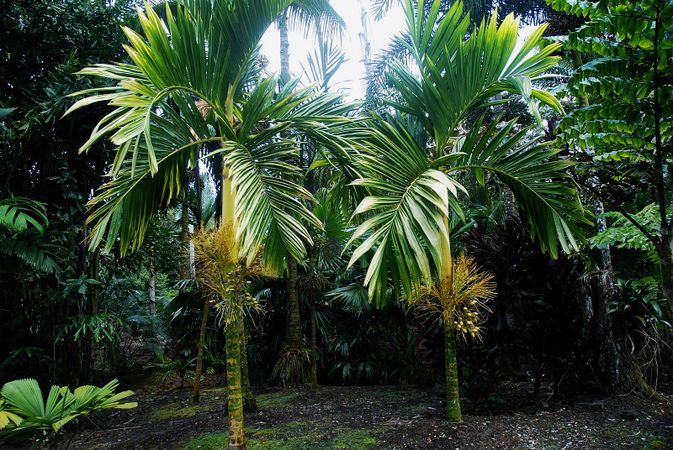
Floribunda Hawaii, 'yellow betelnut', photo by BGL
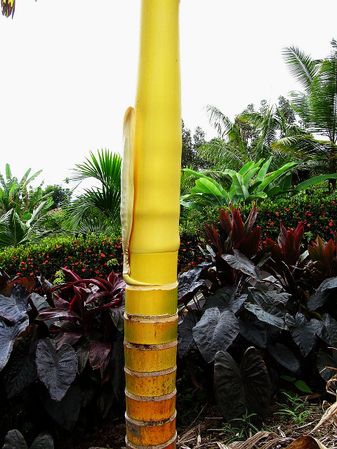
Hawaii. var. 'alba'. Photo by Timothy Brian

Hawaii. var. 'alba'. Photo by Timothy Brian

Hawaii. var. 'dwarf'. Photo by Timothy Brian

Hawaii. var. 'dwarf'. Photo by Timothy Brian

Floribunda Palms, Hawaii, photo by BGL

Floribunda Palms, Hawaii, photo by BGL

Floribunda Palms, Hawaii, photo by BGL
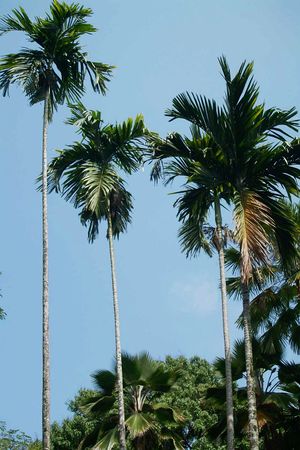
Hawaiian Tropical Botanical Garden.

Hawaiian Tropical Botanical Garden.

Hawaiian Tropical Botanical Garden.

Hawaii. Bill Austin's place. var. 'alba'. Photo by Paul Latzias.

Hawaii. Bill Austin's place. var. 'alba'. Photo by Paul Latzias.

Hawaii. Bill Austin's place. var. 'dwarf'. Photo by Paul Latzias.

Babinda, Queensland, Australia. Mark Daish Botanical Garden & Babinda Palm Supply. Ben and Mark with a very nice Areca catechu. Photo by Paul Latzias.
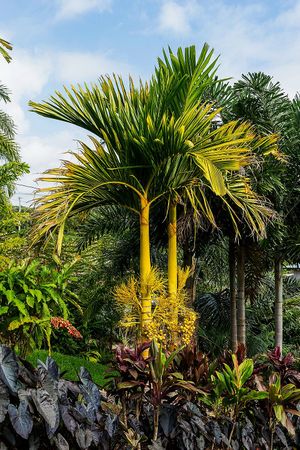
Tim and Bob's Nursery, Hawaii. var. 'alba' Photo by Jack Sayers.

Bill Austin's Garden, Hawaii. var. 'dwarf' Photo by Jack Sayers.

Close to Passara, (Badulla area) Sri Lanka. Photo by Philippe.

Close to Passara, (Badulla area) Sri Lanka. Photo by Philippe.

Close to Passara, (Badulla area) Sri Lanka. Photo by Philippe.

Harri Lorenzi's PLANTARUM, Nova Odessa, Campinas, Sao Paulo, Brazil. Back right. Photo by Alberto Leonardo Barkema.
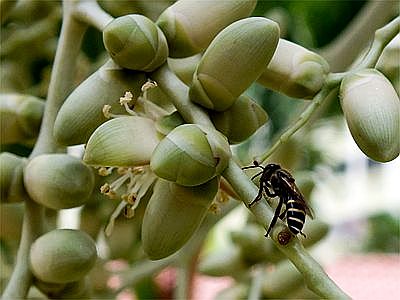
Sweet scent of the Areca palm [Areca catechu], ‘betel nut’ flowers attracted these honeybees. Areca palm, slender palm typically reaching 10–20 m [33–66 ft] tall is one of the popular die-hard trees planted in small gardens around HDB flats, which also cleanse the air. Photo by photoplusbyritasim

Sweet scent of the Areca palm [Areca catechu], ‘betel nut’ flowers attracted these honeybees. Areca palm, slender palm typically reaching 10–20 m [33–66 ft] tall is one of the popular die-hard trees planted in small gardens around HDB flats, which also cleanse the air. Photo by photoplusbyritasim

Sweet scent of the Areca palm [Areca catechu], ‘betel nut’ flowers attracted these honeybees. Areca palm, slender palm typically reaching 10–20 m [33–66 ft] tall is one of the popular die-hard trees planted in small gardens around HDB flats, which also cleanse the air. Photo by photoplusbyritasim

Sweet scent of the Areca palm [Areca catechu], ‘betel nut’ flowers attracted these honeybees. Areca palm, slender palm typically reaching 10–20 m [33–66 ft] tall is one of the popular die-hard trees planted in small gardens around HDB flats, which also cleanse the air. Photo by photoplusbyritasim

Sweet scent of the Areca palm [Areca catechu], ‘betel nut’ flowers attracted these honeybees. Areca palm, slender palm typically reaching 10–20 m [33–66 ft] tall is one of the popular die-hard trees planted in small gardens around HDB flats, which also cleanse the air. Photo by photoplusbyritasim

Searle Brothers Nursery, Florida. "Tim points to the petiole, or in this case, the lack thereof. This is one of the features sought after by those wanting a great specimen" Photo by Ryan D. Gallivan.

'variegata', Thailand. Photo by Philippe Alvarez.

Pomano Beach, FL. Photo by John Doughten.

Pomano Beach, FL. Photo by John Doughten.

Pomano Beach, FL. Photo by John Doughten.
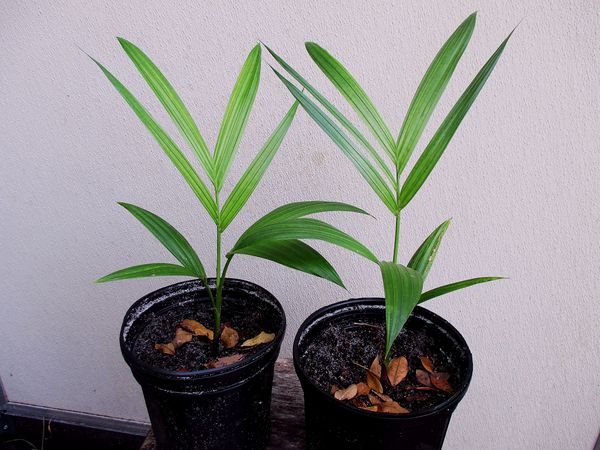
Pomano Beach, FL. Photo by John Doughten.

Pomano Beach, FL. Photo by John Doughten.

Costa Rica. Dwarf seed & fruit. Photo by Jeff Anderson

Costa Rica. Dwarf seed & fruit. Photo by Jeff Anderson


External Links
- Glossary of Palm Terms
- MODERN BOTANICAL LATIN
- "Just To Be Clear"
- http://itp.lucidcentral.org/id/palms/palm-id/Areca_catechu.htm
References
Phonetic spelling of Latin names by edric.
Special thanks to Geoff Stein, (Palmbob) for his hundreds of photos.
Special thanks to Palmweb.org, Dr. John Dransfield, Dr. Bill Baker & team, for their volumes of information and photos.
Glossary of Palm Terms; Based on the glossary in Dransfield, J., N.W. Uhl, C.B. Asmussen-Lange, W.J. Baker, M.M. Harley & C.E. Lewis. 2008. Genera Palmarum - Evolution and Classification of the Palms. Royal Botanic Gardens, Kew. All images copyright of the artists and photographers (see images for credits).
Many Special Thanks to Ed Vaile for his long hours of tireless editing and numerous contributions.