Difference between revisions of "Chrysalidocarpus prestonianus var. 'big curly'"
(re classification) |
|||
| (39 intermediate revisions by 3 users not shown) | |||
| Line 1: | Line 1: | ||
| − | |||
__noeditsection__ | __noeditsection__ | ||
| − | |||
| − | |||
{{Palmbox | {{Palmbox | ||
| − | |image= | + | |image=PICT0025rderjongz.jpg |
| − | |image_caption=Photo by Robert De Jong, Oceanside, CA | + | |image_caption=Photo by Robert De Jong, Oceanside, CA. |
| − | |genus= | + | |genus=Chrysalidocarpus |
| − | |species= | + | |species=<br>prestonianus (pres-toh-nee-AHN-us) <br>var. 'big curly' |
|subspecies= | |subspecies= | ||
|cultivar= | |cultivar= | ||
| Line 22: | Line 19: | ||
|common_names=Tavilo (Betsimisaraka); Babovavy, Tavilo (Antaisaka). | |common_names=Tavilo (Betsimisaraka); Babovavy, Tavilo (Antaisaka). | ||
}} | }} | ||
| − | |||
==Habitat and Distribution== | ==Habitat and Distribution== | ||
| − | + | ''Chrysalidocarpus prestonianus var. 'big curly''' is endemic to Madagascar. Only known from the [[File:wayne (1 of 1).jpg|thumb|left|400px|Dr. Mardi Darian's Garden, San Diego, CA. Wayne giving scale. Photo by Robert.]]Midongy area; an old collection from Mahanoro. Moist forest; slight slope; clay soils derived from laterite; alt. 50-550 m. | |
==Description== | ==Description== | ||
Solitary palm. TRUNK 4-12 m. high, 24-40 cm. in diam.; basal boss about 15 cm high, 40 cm. in diam.; internodes 10-15 cm, pale grey-brown, distally green and smooth; nodal scars c. 3.5 cm, pale grey. LEAVES 8-10 in the crown, spiral, porrect to spreading, arched gracefully in the distal part; sheath 90% open, green to pale brown or grey, with waxy covering, with flaking brown tomentum of peltate scales, about 114 x 28 cm, with distinct rounded shoulders, the sheath in cross-section slightly triangular with thick middle section and thin flat margins; petiole 0-17 cm, about 7 x 6 cm. in diam., deeply channelled; rachis about 4.4 m, channelled in its proximal part (channel 6 cm wide near petiole) but in mid leaf about 3.5 x 3 cm. in diam., with slightly sunken circular waxy scales; pinnae about 164 on each side of the rachis, grouped and fanned within the groups, the groups 3-9 in number, dense and irregular, about 4 cm apart, the individual pinnae 0.3-2 cm apart, the proximal 76 -123 x 1-2.5 cm, the most proximal often with long pendulous reins, median 97-112 x 2.7-4.7 cm, distal 17-50 x 1.3-2.6 cm, main veins 3, plus very thickened margins, abaxially glaucous with white wax, as well as with dense patches of large (- 8 mm) red-brown ramenta on the midrib near the base, pinnae apices unequally bifid and acute. INFLORESCENCE interfoliar, erect with spreading or recurved branches, branched to 3 orders, about 226 x 90 cm; peduncle about 118 cm long, 12 x 4 cm. in diam. proximally, 8 x 4.5 cm. in diam. distally, yellow with brown scales, turning green with redbrown scales; A prophyll about 60 x 20 cm (to 1.2 m, fide Perrier), woody, densely scaly, slightly beaked, only opening near the apex; peduncular bract deciduous (inserted at 55 cm), the distal portion seen with white wax and minute peltate scales, probably beaked; non-sheathing peduncular bract at 91 cm (4.5-5 cm high, base around peduncle), at 105 cm (3.5 cm high, 9 cm wide), at 110 cm (1 x 9 cm); rachis about 106 cm, densely puberulous, with about 26 branched and 8 unbranched first order branches; main first order branches with a rachis of up to 42 cm, proximally up to 4 x 1.5 cm. in diam., with up to 12 branched and 9 unbranched secondary branches; rachillae 9-42 cm, densely puberulous, 2.5-4 mm. in diam., whitish or pale yellow; triads dense, set in slight pits subtended by entire, rounded bracts. STAMINATE FLOWERS in bud with sepals 1.2-1.3 x 1.2-1.3 mm; petals 1.5-1.8 x 1.3-1.4 mm; stamens 6, 1-seriate, with filaments about 1 mm and narrowly cylindrical, anthers 1-1.2 x | Solitary palm. TRUNK 4-12 m. high, 24-40 cm. in diam.; basal boss about 15 cm high, 40 cm. in diam.; internodes 10-15 cm, pale grey-brown, distally green and smooth; nodal scars c. 3.5 cm, pale grey. LEAVES 8-10 in the crown, spiral, porrect to spreading, arched gracefully in the distal part; sheath 90% open, green to pale brown or grey, with waxy covering, with flaking brown tomentum of peltate scales, about 114 x 28 cm, with distinct rounded shoulders, the sheath in cross-section slightly triangular with thick middle section and thin flat margins; petiole 0-17 cm, about 7 x 6 cm. in diam., deeply channelled; rachis about 4.4 m, channelled in its proximal part (channel 6 cm wide near petiole) but in mid leaf about 3.5 x 3 cm. in diam., with slightly sunken circular waxy scales; pinnae about 164 on each side of the rachis, grouped and fanned within the groups, the groups 3-9 in number, dense and irregular, about 4 cm apart, the individual pinnae 0.3-2 cm apart, the proximal 76 -123 x 1-2.5 cm, the most proximal often with long pendulous reins, median 97-112 x 2.7-4.7 cm, distal 17-50 x 1.3-2.6 cm, main veins 3, plus very thickened margins, abaxially glaucous with white wax, as well as with dense patches of large (- 8 mm) red-brown ramenta on the midrib near the base, pinnae apices unequally bifid and acute. INFLORESCENCE interfoliar, erect with spreading or recurved branches, branched to 3 orders, about 226 x 90 cm; peduncle about 118 cm long, 12 x 4 cm. in diam. proximally, 8 x 4.5 cm. in diam. distally, yellow with brown scales, turning green with redbrown scales; A prophyll about 60 x 20 cm (to 1.2 m, fide Perrier), woody, densely scaly, slightly beaked, only opening near the apex; peduncular bract deciduous (inserted at 55 cm), the distal portion seen with white wax and minute peltate scales, probably beaked; non-sheathing peduncular bract at 91 cm (4.5-5 cm high, base around peduncle), at 105 cm (3.5 cm high, 9 cm wide), at 110 cm (1 x 9 cm); rachis about 106 cm, densely puberulous, with about 26 branched and 8 unbranched first order branches; main first order branches with a rachis of up to 42 cm, proximally up to 4 x 1.5 cm. in diam., with up to 12 branched and 9 unbranched secondary branches; rachillae 9-42 cm, densely puberulous, 2.5-4 mm. in diam., whitish or pale yellow; triads dense, set in slight pits subtended by entire, rounded bracts. STAMINATE FLOWERS in bud with sepals 1.2-1.3 x 1.2-1.3 mm; petals 1.5-1.8 x 1.3-1.4 mm; stamens 6, 1-seriate, with filaments about 1 mm and narrowly cylindrical, anthers 1-1.2 x | ||
| − | 0.4 mm with parallel locules, versatile and dorsifixed; pistillode about 0.8 x 0.3 mm. PISTILLATE FLOWERS with sepals 1.5-2.2 x 1.6-2.4 mm, concave, orbicular, rounded, minutely ciliolate; petals 2-2.6 x 2.1-2.8 mm, broadly obovate with a small apiculus; staminodes 6, 0.4-1 mm high, thin and flat; ovary about 2.5 x 1.8 mm, asymmetrical. FRUIT ellipsoid with rounded apex, 12-15 x 6-8 mm, orange; endocarp fibrous. SEED narrowly ellipsoid, 11-12 x 5-5.5 mm, acute at base, rounded at apex, with homogeneous endosperm with slight marginal undulations | + | 0.4 mm with parallel locules, versatile and dorsifixed; pistillode about 0.8 x 0.3 mm. PISTILLATE FLOWERS with sepals 1.5-2.2 x 1.6-2.4 mm, concave, orbicular, rounded, minutely ciliolate; petals 2-2.6 x 2.1-2.8 mm, broadly obovate with a small apiculus; staminodes 6, 0.4-1 mm high, thin and flat; ovary about 2.5 x 1.8 mm, asymmetrical. FRUIT ellipsoid with rounded apex, 12-15 x 6-8 mm, orange; endocarp fibrous. SEED narrowly ellipsoid, 11-12 x 5-5.5 mm, acute at base, rounded at apex, with homogeneous endosperm with slight marginal undulations. (J. Dransfield and H. Beentje. 1995)/Palmweb. Editing by edric. |
| − | Quite distinct from other large solitary species with grouped pinnae by its long and interfoliar inflorescence with densely puberulous rachillae, and homogeneous endosperm. (J. Dransfield and H. Beentje. 1995). | + | Quite distinct from other large solitary species with grouped pinnae by its long and interfoliar inflorescence with densely puberulous rachillae, and homogeneous endosperm. (J. Dransfield and H. Beentje. 1995)/Palmweb. |
==Culture== | ==Culture== | ||
| − | + | Cold Hardiness Zone 9b | |
==Comments and Curiosities== | ==Comments and Curiosities== | ||
| − | Four basic characteristics make this variation stand out from its counterpart, regular D. prestoniana. One: its mammouth size, (3 and sometime 4 times the size of a regular D. prestoniana) huge even at the juvenile stage, no confusing this palm with a regular D. prestoniana. Second: its much curlier and wider pinnae. Third: its nearly always green, I mean green color. And four: its ease of care to maintain that green color, regular D. prestoniana struggles to keep any semblance of a solid green appearance, (except in Hawaii, once it's well rooted in the ground) often exhibiting a two tone, light green, dark green, striped pinnae (Bill Sanford refers to as the Oreo look | + | Four basic characteristics make this variation stand out from its counterpart, regular D. prestoniana. One: its mammouth size, (3 and sometime 4 times the size of a regular D. prestoniana) huge even at the juvenile stage, no confusing this palm with a regular D. prestoniana. Second: its much curlier and wider pinnae. Third: its nearly always green, I mean green color. And four: its ease of care to maintain that green color, regular D. prestoniana struggles to keep any semblance of a solid green appearance, (except in Hawaii, once it's well rooted in the ground) often exhibiting a two tone, light green, dark green, striped pinnae and spear (Bill Sanford refers to as the Oreo look). |
| − | A species which was discovered through serendipity: HB was trying to refind Chrysalidocarpus midongensis (now a synonym of D. onilahensis), unaware that that taxon came from a totally different Midongy (a small hamlet in the Itremo Mountains), failed to find it, but spotted this elegant tree on the skyline of a hill. The specific epithet honours Mr. Paul Preston, President of McDonald's Restaurants Limited (UK), who sponsored the four-year Palms of Madagascar fellowship. (J. Dransfield and H. Beentje. 1995). | + | A species which was discovered through serendipity: HB was trying to refind Chrysalidocarpus midongensis (now a synonym of D. onilahensis), unaware that that taxon came from a totally different Midongy (a small hamlet in the Itremo Mountains), failed to find it, but spotted this elegant tree on the skyline of a hill. The specific epithet honours Mr. Paul Preston, President of McDonald's Restaurants Limited (UK), who sponsored the four-year Palms of Madagascar fellowship. (J. Dransfield and H. Beentje. 1995)/Palmweb. |
| − | Conservation: Vulnerable. At present only known from the Midongy area, where numbers do not exceed two hundred. None occurs in a protected area. HB has visited the Mahanoro area, which is nowadays devoid of tree palms. (J. Dransfield and H. Beentje. 1995). | + | Conservation: Vulnerable. At present only known from the Midongy area, where numbers do not exceed two hundred. None occurs in a protected area. HB has visited the Mahanoro area, which is nowadays devoid of tree palms. (J. Dransfield and H. Beentje. 1995)/Palmweb. |
| + | |||
| + | <br clear="all"> | ||
| + | {{#Widget:AdResban}} | ||
| + | <center><gallery caption="IMAGE GALLERY" perrow="" widths="" heights=""> | ||
| + | Image:Dypsis Big Curly tokorovina maybe.jpg|var. 'big curly' | ||
| + | image:Post-151-0-14904000-1388864522z.jpg|Escondido, CA. Photo by Gary T. Le Vine | ||
| + | image:Dyps_bigcurl_081008_fvbglz.jpg|Photo by BGL, Hawaii | ||
| + | image:Dyps_mony_061012_cubglz.jpg|Photo by BGL, Hawaii | ||
| + | image:Dyps_mony_061012_fvbglz.jpg|Photo by BGL, Hawaii | ||
| + | image:FloPa_080612_Big_curlymarcusz.jpg|Marcus Garden, Hawaii. | ||
| + | image:PICT0025rderjongz.jpg|Photo by Robert De Jong, Oceanside, CA. | ||
| + | image:New_001bill.jpg|Photo by Bill Sanford, Oceanside, CA. | ||
| + | image:Vari_004bill.jpg|Photo by Bill Sanford, Oceanside, CA. | ||
| + | image:Picturetest35025gtlevinez.jpg|Photo by Gary Le Vine, Escondido, Cal. | ||
| + | image:GtlDSC_3279.jpg|Photo by Gary Le Vine, Escondido, Cal. | ||
| + | image:GtlDSC_3280.jpg|Photo by Gary Le Vine, Escondido, Cal. | ||
| + | image:DpbgIMG_4649.jpg|Troy giving scale. At Gary Le Vines place. Escondito, CA. Photo by Troy Donovan | ||
| + | image:Bicoct12_001z.jpg|Oceanside, CA. Photo by Bill Sanford | ||
| + | image:Bicoct12_003.JPG|Oceanside, CA. Photo by Bill Sanford | ||
| + | image:Bicoct12_004.JPG|Oceanside, CA. Photo by Bill Sanford | ||
| + | image:Bicoct12_005.JPG|Oceanside, CA. Photo by Bill Sanford | ||
| + | image:Bicoct12_006z.jpg|Oceanside, CA. Photo by Bill Sanford | ||
| + | File:post-22-0-73054000-1417489765.jpg|Oceanside, CA. Bill & Bo at Bill's house. Photo by Kim | ||
| + | image:Mejune2013_003.JPG|6/13, Bill Sanford for scale. Oceanside, CA. Photo by Bill Sanford | ||
| + | image:Post-27-0-21347400-1394502135.jpg|Oceanside, CA. Photo by Bill Sanford | ||
| + | image:Post-27-0-94590300-1393832423.jpg|3/2014, Oceanside, CA. Photo by Bill Sanford | ||
| + | File:post-27-0-92045700-1417474516.jpg|12/2014, Oceanside, CA. Photo by Bill Sanford | ||
| + | File:post-27-0-29206200-1417474665.jpg|12/2014, Oceanside, CA. Photo by Bill Sanford | ||
| + | File:post-27-0-10761800-1432762286.jpg|05/2015, Oceanside, CA. Photo by Bill Sanford | ||
| + | File:post-27-0-60702600-1432762094.jpg|05/2015, Oceanside, CA. First flower. Photo by Bill Sanford | ||
| + | File:post-27-0-49735400-1432872238.jpg|05/2015, Oceanside, CA. First flower. Photo by Bill Sanford | ||
| + | File:post-27-0-13943500-1435124630.jpg|06/2015, Oceanside, CA. First flower. Photo by Bill Sanford | ||
| + | File:post-27-0-72828200-1435124863.jpg|06/2015, Oceanside, CA. First flower. Photo by Bill Sanford | ||
| + | File:post-27-0-48698800-1435125193.jpg|06/2015, Oceanside, CA. First flower. Photo by Bill Sanford | ||
| + | |||
| + | File:post-3609-0-02203400-1432781733.jpg|Hawaii. Photo by Dr. George Peavy. | ||
| + | File:post-3609-0-87443000-1432781749.jpg|Hawaii. Photo by Dr. George Peavy. | ||
| + | |||
| + | File:wayne (1 of 1).jpg|Dr. Mardi Darian's Garden, San Diego, CA. Wayne giving scale. Photo by Robert. | ||
| + | |||
| + | image:Curly1z.jpg|Coastal grown in full sun, SoCal. Photo by Braden de Jong | ||
| + | image:Curly2z.jpg|Coastal grown in full sun, SoCal. Photo by Braden de Jong | ||
| + | image:Curly3z.jpg|Coastal grown in full sun, SoCal. Photo by Braden de Jong | ||
| + | image:Curly4z.jpg|Coastal grown in full sun, SoCal. Photo by Braden de Jong | ||
| + | image:Post-6412-0-16658700-1389870532.jpg|SE Queensland, Australia. Photo by Benjamin Smith | ||
| + | image:Post-6412-0-58657600-1389870819.jpg|SE Queensland, Australia. Photo by Benjamin Smith | ||
| + | image:Post-6412-0-81656400-1389870903.jpg|SE Queensland, Australia. Photo by Benjamin Smith | ||
| + | File:dpIMG_0400.jpg|Oak Hill, FL. Germinated 6/2009. Seed source: RPS. Oak Hill, FL. 11/2017 edric. | ||
| + | File:dpIMG_0401.jpg|Oak Hill, FL. Germinated 6/2009. Seed source: RPS. Oak Hill, FL. 11/2017 edric. | ||
| + | File:dpIMG_0405.jpg|Oak Hill, FL. Germinated 6/2009. Seed source: RPS. Oak Hill, FL. 11/2017 edric. | ||
| + | File:dpIMG_0412.jpg|Oak Hill, FL. Germinated 6/2009. Seed source: RPS. Oak Hill, FL. 11/2017 edric. | ||
| + | File:dpIMG_0416.jpg|Oak Hill, FL. Germinated 6/2009. Seed source: RPS. Oak Hill, FL. 11/2017 edric. | ||
| + | File:dpIMG_0417.jpg|Oak Hill, FL. Germinated 6/2009. Seed source: RPS. Oak Hill, FL. 11/2017 edric. | ||
| + | File:dpIMG_0419.jpg|Oak Hill, FL. Germinated 6/2009. Seed source: RPS. Oak Hill, FL. 11/2017 edric. | ||
| + | |||
| + | </gallery></center> | ||
==External Links== | ==External Links== | ||
*[http://eunops.org/content/glossary-palm-terms Glossary of Palm Terms] | *[http://eunops.org/content/glossary-palm-terms Glossary of Palm Terms] | ||
| − | *[http://www. | + | *[http://www.calflora.net/botanicalnames/pronunciation.html MODERN BOTANICAL LATIN] |
| + | *[http://www.jlhudsonseeds.net/Pronunciation.htm "Just To Be Clear"] | ||
*http://www.youtube.com/watch?v=eVLcoWnYmvc | *http://www.youtube.com/watch?v=eVLcoWnYmvc | ||
| + | *[http://www.youtube.com/watch?feature=player_embedded&v=4j2HHVc6jdE Bill Sanford's tree, 7/2013] | ||
| + | *[http://www.youtube.com/watch?feature=player_embedded&v=IzwcFA0NkWI Bill Sanford's tree, 8/2013] | ||
==References== | ==References== | ||
| − | + | Phonetic spelling of Latin names by edric. | |
| + | Edit by João Santos Costa | ||
| − | Special thanks to | + | Special thanks to Geoff Stein, (Palmbob) for his hundreds of photos. |
| − | + | Special thanks to [http://palmweb.org/?q=node/2 Palmweb.org], Dr. John Dransfield, Dr. Bill Baker & team, for their volumes of information and photos. | |
| − | + | ||
| − | + | Glossary of Palm Terms; Based on the glossary in Dransfield, J., N.W. Uhl, C.B. Asmussen-Lange, W.J. Baker, M.M. Harley & C.E. Lewis. 2008. Genera Palmarum - Evolution and Classification of the Palms. Royal Botanic Gardens, Kew. All images copyright of the artists and photographers (see images for credits). | |
| − | + | ||
| − | + | Dransfield, J. & Beentje, H. 1995. The Palms of Madagascar. Royal Botanic Gardens, Kew and The International Palm Society. | |
| − | + | ||
| − | + | ||
| − | + | ||
| − | + | ||
| − | + | ||
| − | + | ||
| − | + | ||
| − | + | ||
| − | + | ||
| − | + | ||
| − | + | ||
| − | + | ||
| − | + | ||
| − | + | ||
| − | + | ||
| − | + | ||
| − | + | ||
{{SpeciesListBackLink}} | {{SpeciesListBackLink}} | ||
[[Category:Palms of Madagascar]] | [[Category:Palms of Madagascar]] | ||
| − | [[Category: | + | [[Category:CHRYSALIDOCARPUS|prestonianus var. 'big curly']] |
Latest revision as of 12:51, 13 February 2023
| Chrysalidocarpus prestonianus (pres-toh-nee-AHN-us) var. 'big curly' | |||||||
|---|---|---|---|---|---|---|---|
 Photo by Robert De Jong, Oceanside, CA. | |||||||
| Scientific Classification | |||||||
| |||||||
| Synonyms | |||||||
|
| |||||||
| Native Continent | |||||||
 | |||||||
| Morphology | |||||||
| |||||||
| Culture | |||||||
|
| |||||||
| Survivability index | |||||||
|
| |||||||
| Common names | |||||||
|
| |||||||
Contents
Habitat and Distribution
Chrysalidocarpus prestonianus var. 'big curly' is endemic to Madagascar. Only known from the.jpg)
Description
Solitary palm. TRUNK 4-12 m. high, 24-40 cm. in diam.; basal boss about 15 cm high, 40 cm. in diam.; internodes 10-15 cm, pale grey-brown, distally green and smooth; nodal scars c. 3.5 cm, pale grey. LEAVES 8-10 in the crown, spiral, porrect to spreading, arched gracefully in the distal part; sheath 90% open, green to pale brown or grey, with waxy covering, with flaking brown tomentum of peltate scales, about 114 x 28 cm, with distinct rounded shoulders, the sheath in cross-section slightly triangular with thick middle section and thin flat margins; petiole 0-17 cm, about 7 x 6 cm. in diam., deeply channelled; rachis about 4.4 m, channelled in its proximal part (channel 6 cm wide near petiole) but in mid leaf about 3.5 x 3 cm. in diam., with slightly sunken circular waxy scales; pinnae about 164 on each side of the rachis, grouped and fanned within the groups, the groups 3-9 in number, dense and irregular, about 4 cm apart, the individual pinnae 0.3-2 cm apart, the proximal 76 -123 x 1-2.5 cm, the most proximal often with long pendulous reins, median 97-112 x 2.7-4.7 cm, distal 17-50 x 1.3-2.6 cm, main veins 3, plus very thickened margins, abaxially glaucous with white wax, as well as with dense patches of large (- 8 mm) red-brown ramenta on the midrib near the base, pinnae apices unequally bifid and acute. INFLORESCENCE interfoliar, erect with spreading or recurved branches, branched to 3 orders, about 226 x 90 cm; peduncle about 118 cm long, 12 x 4 cm. in diam. proximally, 8 x 4.5 cm. in diam. distally, yellow with brown scales, turning green with redbrown scales; A prophyll about 60 x 20 cm (to 1.2 m, fide Perrier), woody, densely scaly, slightly beaked, only opening near the apex; peduncular bract deciduous (inserted at 55 cm), the distal portion seen with white wax and minute peltate scales, probably beaked; non-sheathing peduncular bract at 91 cm (4.5-5 cm high, base around peduncle), at 105 cm (3.5 cm high, 9 cm wide), at 110 cm (1 x 9 cm); rachis about 106 cm, densely puberulous, with about 26 branched and 8 unbranched first order branches; main first order branches with a rachis of up to 42 cm, proximally up to 4 x 1.5 cm. in diam., with up to 12 branched and 9 unbranched secondary branches; rachillae 9-42 cm, densely puberulous, 2.5-4 mm. in diam., whitish or pale yellow; triads dense, set in slight pits subtended by entire, rounded bracts. STAMINATE FLOWERS in bud with sepals 1.2-1.3 x 1.2-1.3 mm; petals 1.5-1.8 x 1.3-1.4 mm; stamens 6, 1-seriate, with filaments about 1 mm and narrowly cylindrical, anthers 1-1.2 x 0.4 mm with parallel locules, versatile and dorsifixed; pistillode about 0.8 x 0.3 mm. PISTILLATE FLOWERS with sepals 1.5-2.2 x 1.6-2.4 mm, concave, orbicular, rounded, minutely ciliolate; petals 2-2.6 x 2.1-2.8 mm, broadly obovate with a small apiculus; staminodes 6, 0.4-1 mm high, thin and flat; ovary about 2.5 x 1.8 mm, asymmetrical. FRUIT ellipsoid with rounded apex, 12-15 x 6-8 mm, orange; endocarp fibrous. SEED narrowly ellipsoid, 11-12 x 5-5.5 mm, acute at base, rounded at apex, with homogeneous endosperm with slight marginal undulations. (J. Dransfield and H. Beentje. 1995)/Palmweb. Editing by edric.
Quite distinct from other large solitary species with grouped pinnae by its long and interfoliar inflorescence with densely puberulous rachillae, and homogeneous endosperm. (J. Dransfield and H. Beentje. 1995)/Palmweb.
Culture
Cold Hardiness Zone 9b
Comments and Curiosities
Four basic characteristics make this variation stand out from its counterpart, regular D. prestoniana. One: its mammouth size, (3 and sometime 4 times the size of a regular D. prestoniana) huge even at the juvenile stage, no confusing this palm with a regular D. prestoniana. Second: its much curlier and wider pinnae. Third: its nearly always green, I mean green color. And four: its ease of care to maintain that green color, regular D. prestoniana struggles to keep any semblance of a solid green appearance, (except in Hawaii, once it's well rooted in the ground) often exhibiting a two tone, light green, dark green, striped pinnae and spear (Bill Sanford refers to as the Oreo look).
A species which was discovered through serendipity: HB was trying to refind Chrysalidocarpus midongensis (now a synonym of D. onilahensis), unaware that that taxon came from a totally different Midongy (a small hamlet in the Itremo Mountains), failed to find it, but spotted this elegant tree on the skyline of a hill. The specific epithet honours Mr. Paul Preston, President of McDonald's Restaurants Limited (UK), who sponsored the four-year Palms of Madagascar fellowship. (J. Dransfield and H. Beentje. 1995)/Palmweb.
Conservation: Vulnerable. At present only known from the Midongy area, where numbers do not exceed two hundred. None occurs in a protected area. HB has visited the Mahanoro area, which is nowadays devoid of tree palms. (J. Dransfield and H. Beentje. 1995)/Palmweb.
- IMAGE GALLERY
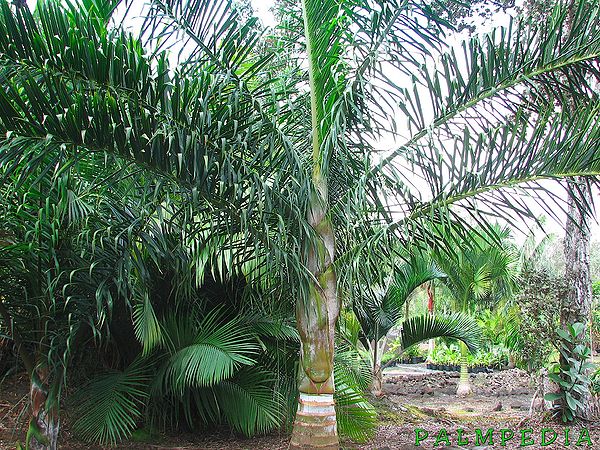
var. 'big curly'

Escondido, CA. Photo by Gary T. Le Vine

Photo by BGL, Hawaii
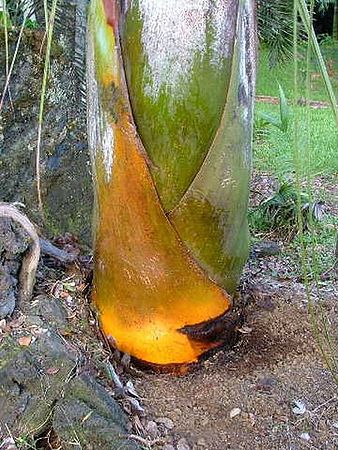
Photo by BGL, Hawaii

Photo by BGL, Hawaii

Marcus Garden, Hawaii.

Photo by Robert De Jong, Oceanside, CA.

Photo by Bill Sanford, Oceanside, CA.

Photo by Bill Sanford, Oceanside, CA.

Photo by Gary Le Vine, Escondido, Cal.

Photo by Gary Le Vine, Escondido, Cal.

Photo by Gary Le Vine, Escondido, Cal.
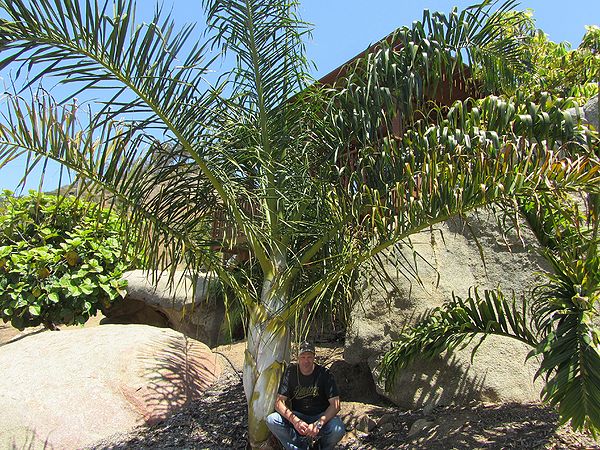
Troy giving scale. At Gary Le Vines place. Escondito, CA. Photo by Troy Donovan

Oceanside, CA. Photo by Bill Sanford
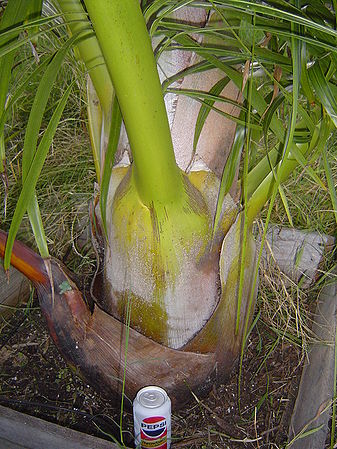
Oceanside, CA. Photo by Bill Sanford

Oceanside, CA. Photo by Bill Sanford

Oceanside, CA. Photo by Bill Sanford

Oceanside, CA. Photo by Bill Sanford

Oceanside, CA. Bill & Bo at Bill's house. Photo by Kim

6/13, Bill Sanford for scale. Oceanside, CA. Photo by Bill Sanford

Oceanside, CA. Photo by Bill Sanford

3/2014, Oceanside, CA. Photo by Bill Sanford

12/2014, Oceanside, CA. Photo by Bill Sanford

12/2014, Oceanside, CA. Photo by Bill Sanford

05/2015, Oceanside, CA. Photo by Bill Sanford
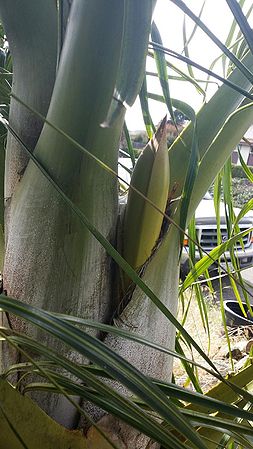
05/2015, Oceanside, CA. First flower. Photo by Bill Sanford

05/2015, Oceanside, CA. First flower. Photo by Bill Sanford

06/2015, Oceanside, CA. First flower. Photo by Bill Sanford
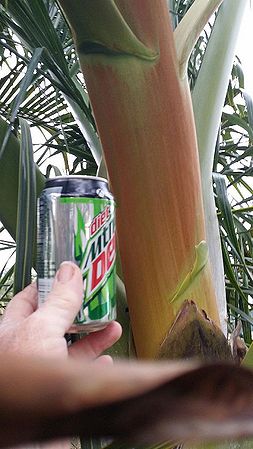
06/2015, Oceanside, CA. First flower. Photo by Bill Sanford
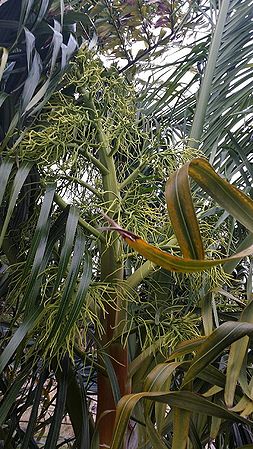
06/2015, Oceanside, CA. First flower. Photo by Bill Sanford
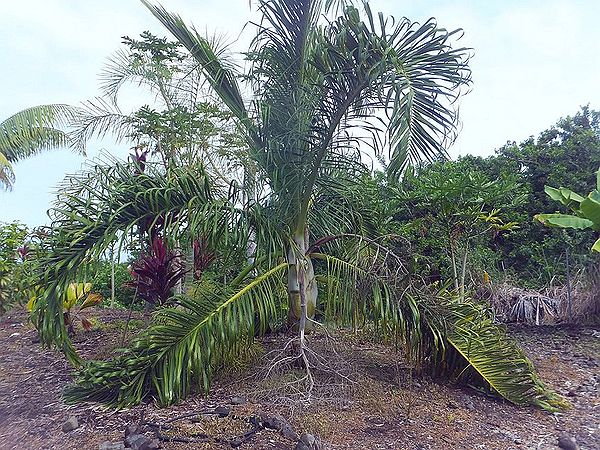
Hawaii. Photo by Dr. George Peavy.
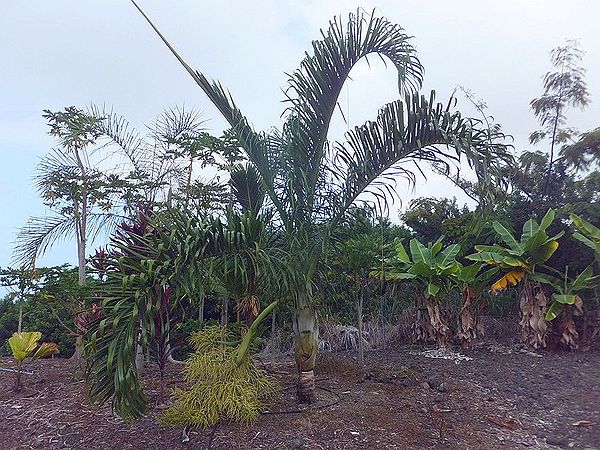
Hawaii. Photo by Dr. George Peavy.

Dr. Mardi Darian's Garden, San Diego, CA. Wayne giving scale. Photo by Robert.

Coastal grown in full sun, SoCal. Photo by Braden de Jong

Coastal grown in full sun, SoCal. Photo by Braden de Jong

Coastal grown in full sun, SoCal. Photo by Braden de Jong

Coastal grown in full sun, SoCal. Photo by Braden de Jong

SE Queensland, Australia. Photo by Benjamin Smith

SE Queensland, Australia. Photo by Benjamin Smith

SE Queensland, Australia. Photo by Benjamin Smith

Oak Hill, FL. Germinated 6/2009. Seed source: RPS. Oak Hill, FL. 11/2017 edric.

Oak Hill, FL. Germinated 6/2009. Seed source: RPS. Oak Hill, FL. 11/2017 edric.

Oak Hill, FL. Germinated 6/2009. Seed source: RPS. Oak Hill, FL. 11/2017 edric.

Oak Hill, FL. Germinated 6/2009. Seed source: RPS. Oak Hill, FL. 11/2017 edric.
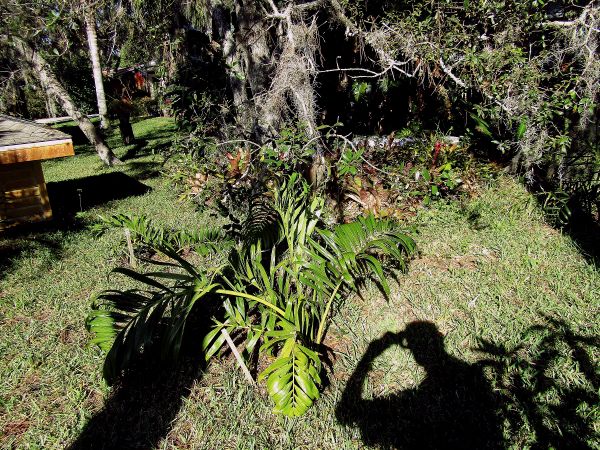
Oak Hill, FL. Germinated 6/2009. Seed source: RPS. Oak Hill, FL. 11/2017 edric.

Oak Hill, FL. Germinated 6/2009. Seed source: RPS. Oak Hill, FL. 11/2017 edric.
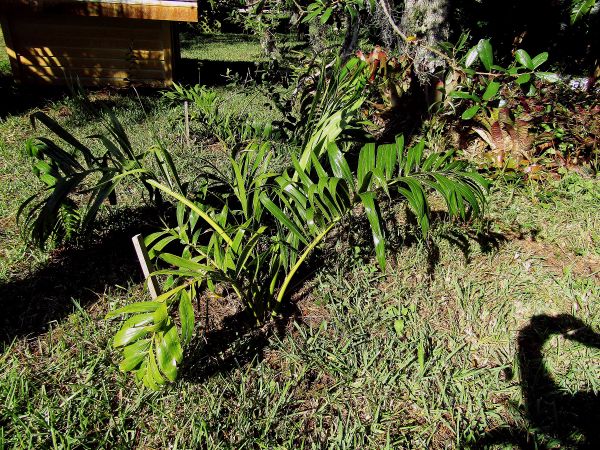
Oak Hill, FL. Germinated 6/2009. Seed source: RPS. Oak Hill, FL. 11/2017 edric.


External Links
- Glossary of Palm Terms
- MODERN BOTANICAL LATIN
- "Just To Be Clear"
- http://www.youtube.com/watch?v=eVLcoWnYmvc
- Bill Sanford's tree, 7/2013
- Bill Sanford's tree, 8/2013
References
Phonetic spelling of Latin names by edric. Edit by João Santos Costa
Special thanks to Geoff Stein, (Palmbob) for his hundreds of photos.
Special thanks to Palmweb.org, Dr. John Dransfield, Dr. Bill Baker & team, for their volumes of information and photos.
Glossary of Palm Terms; Based on the glossary in Dransfield, J., N.W. Uhl, C.B. Asmussen-Lange, W.J. Baker, M.M. Harley & C.E. Lewis. 2008. Genera Palmarum - Evolution and Classification of the Palms. Royal Botanic Gardens, Kew. All images copyright of the artists and photographers (see images for credits).
Dransfield, J. & Beentje, H. 1995. The Palms of Madagascar. Royal Botanic Gardens, Kew and The International Palm Society.
Many Special Thanks to Ed Vaile for his long hours of tireless editing and numerous contributions.