Difference between revisions of "Chrysalidocarpus lutescens"
| (4 intermediate revisions by 2 users not shown) | |||
| Line 1: | Line 1: | ||
| − | __noeditsection__ | + | <big>__noeditsection__ |
| + | "Golden Cane Palm"</big> | ||
{{Palmbox | {{Palmbox | ||
|image=458e643d-20ea-48d6-b881-059d7b94fec6.jpg | |image=458e643d-20ea-48d6-b881-059d7b94fec6.jpg | ||
|image_caption=Hawaii. | |image_caption=Hawaii. | ||
| − | |genus= | + | |genus=Chrysalidocarpus |
|species=<br>lutescens (loo-TEHS-senz) | |species=<br>lutescens (loo-TEHS-senz) | ||
|subspecies= | |subspecies= | ||
| Line 20: | Line 21: | ||
}} | }} | ||
==Habitat and Distribution== | ==Habitat and Distribution== | ||
| − | + | Chrysalidocarpus Lutescens is found in East Madagascar and La Réunion. On littoral forest or heath vegetation [[Image:Dlutescens2.JPG|thumb|left|400px]]on white sand, also on rock; persists in secondary growth and may be locally common. Alt. 5-35 m. | |
==Description== | ==Description== | ||
| − | + | Chrysalidocarpus Lutescens is one of the world's most common palms as a result of its extensive use as an indoor 'plantscaping' specimen. In this trade it is referred as an Areca Palm, although it does not belong to the palm genus of Areca. It can also be seen used extensively as a hedge in more tropical situations. It generally carries a yellow cast to its parts, although there appears to be greener variations, and even one with a bluish cast to the beautiful recurving fronds. Editing by edric. | |
Wendland described the genus Chrysalidocarpus and the species Chrysalidocarpus lutescens at the same time; he also mentioned that this was a common indoors palm in Europe, known as Areca or Hyophorbe indica or lutescens, and also as Areca borbonica or A. dicksoni (= Dictyospermum album); none of these names refers to the Madagascar material. [Chrysalidocarpus lutescens is not based on the Bory name Hyophorbe lutescens, since Wendland states categorically that he is describing the species as distinct from Hyophorbe. Areca lutescens Bory was described from specimens from La Réunion, and is a synonym of Hyophorbe indica Gaertn. Areca borbonica is an old garden name for Dictyosperma album (Bory) H. Wendl. & Drude. None of these palms conforms to the description Wendland gave for his new species, with its green leaf-sheaths with a waxy bloom combined with a clustering habit]. With D. arenarum and D. psammophila it forms a complex that requires further study, particularly since all three taxa occur in the same area and almost in the same habitat. This complex seems close to D. baronii and D. onilahensis, to which it bears an uncanny resemblance. We are tentatively including Chrysalidocarpus glaucescens Waby in synonymy. This species was based on a particularly glaucous and robust plant cultivated in Trinidad. It is certainly larger in all its parts than D. lutescens but we do not think it can be anything else. (J. Dransfield and H. Beentje. 1995)/Palmweb. | Wendland described the genus Chrysalidocarpus and the species Chrysalidocarpus lutescens at the same time; he also mentioned that this was a common indoors palm in Europe, known as Areca or Hyophorbe indica or lutescens, and also as Areca borbonica or A. dicksoni (= Dictyospermum album); none of these names refers to the Madagascar material. [Chrysalidocarpus lutescens is not based on the Bory name Hyophorbe lutescens, since Wendland states categorically that he is describing the species as distinct from Hyophorbe. Areca lutescens Bory was described from specimens from La Réunion, and is a synonym of Hyophorbe indica Gaertn. Areca borbonica is an old garden name for Dictyosperma album (Bory) H. Wendl. & Drude. None of these palms conforms to the description Wendland gave for his new species, with its green leaf-sheaths with a waxy bloom combined with a clustering habit]. With D. arenarum and D. psammophila it forms a complex that requires further study, particularly since all three taxa occur in the same area and almost in the same habitat. This complex seems close to D. baronii and D. onilahensis, to which it bears an uncanny resemblance. We are tentatively including Chrysalidocarpus glaucescens Waby in synonymy. This species was based on a particularly glaucous and robust plant cultivated in Trinidad. It is certainly larger in all its parts than D. lutescens but we do not think it can be anything else. (J. Dransfield and H. Beentje. 1995)/Palmweb. | ||
| Line 56: | Line 57: | ||
image:GBPIX_photo_515128.jpg|Saint Denis, La Réunion Island. "Photo by Olivier Reilhes" | image:GBPIX_photo_515128.jpg|Saint Denis, La Réunion Island. "Photo by Olivier Reilhes" | ||
image:GBPIX_photo_515129.jpg|Saint Denis, La Réunion Island. "Photo by Olivier Reilhes" | image:GBPIX_photo_515129.jpg|Saint Denis, La Réunion Island. "Photo by Olivier Reilhes" | ||
| + | File:26812450343_678c48e3d7_o.jpg|Farankaraina - Masoala - East Coast of Madagascar. Photo by "Olivier Reilhes". | ||
| + | |||
File:10839997906_f4c4c19552_b.jpg|Palms of Vohibola Reserve - East Coast of Madagascar. Photo by "Olivier Reilhes" | File:10839997906_f4c4c19552_b.jpg|Palms of Vohibola Reserve - East Coast of Madagascar. Photo by "Olivier Reilhes" | ||
image:DlIMG_20110611_104111_(600x800).jpg|Sydney, Australia. Photo by Adam. | image:DlIMG_20110611_104111_(600x800).jpg|Sydney, Australia. Photo by Adam. | ||
image:Ffff0033.jpg|"Copernicia baileyana in the front, Copernicia gigas to the right, and the hedge is Dypsis lutescens." La Habana Botanical Garden, Cuba. Photo by Jason Schoneman. | image:Ffff0033.jpg|"Copernicia baileyana in the front, Copernicia gigas to the right, and the hedge is Dypsis lutescens." La Habana Botanical Garden, Cuba. Photo by Jason Schoneman. | ||
| − | image:598851_10151253319504434_1349161527_n.jpg|"Small Coconut and Dypsis lutescens." Medellin, | + | image:598851_10151253319504434_1349161527_n.jpg|"Small Coconut and Dypsis lutescens." Medellin, Colombia. (1,500 Mts. or 5,000 feet above see level), Photo by Jeff Anderson. |
| − | image:552757_10151253346659434_772186823_n.jpg|Medellin, | + | image:552757_10151253346659434_772186823_n.jpg|Medellin, Colombia. (1,500 Mts. or 5,000 feet above see level), Photo by Jeff Anderson. |
image:8707340812_268cdb330a_o.jpg|Garden of the previous KLM-hotel "Plaswijck" in Bangkok, Thailand. Photo by Estoy Unico. | image:8707340812_268cdb330a_o.jpg|Garden of the previous KLM-hotel "Plaswijck" in Bangkok, Thailand. Photo by Estoy Unico. | ||
File:post-7381-0-62337100-1419998711.jpg|Sunshine coast, Queensland, Australia. Leo Gamble's place. Photo by Paul Latzias. | File:post-7381-0-62337100-1419998711.jpg|Sunshine coast, Queensland, Australia. Leo Gamble's place. Photo by Paul Latzias. | ||
| Line 68: | Line 71: | ||
File:dlatIMG_5443.JPG.40b9565399396a47accba48eec098c81.JPG|Fallbrook, CA. Dypsis Lutescens, Archontohphoenix Tuckerii, Dypsis Leptocheillos x Decaryi (Teddy x Triangle). Photo by Jason Dunn. | File:dlatIMG_5443.JPG.40b9565399396a47accba48eec098c81.JPG|Fallbrook, CA. Dypsis Lutescens, Archontohphoenix Tuckerii, Dypsis Leptocheillos x Decaryi (Teddy x Triangle). Photo by Jason Dunn. | ||
File:568c52278a8b9_GardenoftheGoldenCanes011-3-16.JPG.060d22c874d1570b13269c033314bec2.JPG|New Year 2016 Garden Photos - Cape Coral, FL. Garden of the Golden Canes. Photo by Margaret Price. | File:568c52278a8b9_GardenoftheGoldenCanes011-3-16.JPG.060d22c874d1570b13269c033314bec2.JPG|New Year 2016 Garden Photos - Cape Coral, FL. Garden of the Golden Canes. Photo by Margaret Price. | ||
| − | + | File:dyplut.jpg.239118468aa7114e9df40e0c739da1a8.jpg|"Last week I got an early morning tour of the landscape at Disney's Animal Kingdom. This is in the new 14 acre Pandora section. It is based on the Avatar movie. They have done a spectacular job with the landscaping using many, many unusual and odd plants. They have also added "fake" alien plants and the blend is seamless. The detail of this park is just incredible. In addition to the Caryota obtusa (they planted over 200 of these) which I posted in a separate post, they planted some other nice palms and most aren't the common specimens found here. Bismarckia nobilis, most of these were 25-30ft tall and several were green forms". Dypsis lutescens. Orlando, FL. Photo by H.P. Leu Gardens Botanist Eric S. | |
image:DypLut.jpg|Photo-Rare Palm Seeds.com | image:DypLut.jpg|Photo-Rare Palm Seeds.com | ||
</gallery></center> | </gallery></center> | ||
| Line 78: | Line 81: | ||
==References== | ==References== | ||
Phonetic spelling of Latin names by edric. | Phonetic spelling of Latin names by edric. | ||
| + | Edit by João Santos Costa | ||
Special thanks to Geoff Stein, (Palmbob) for his hundreds of photos. | Special thanks to Geoff Stein, (Palmbob) for his hundreds of photos. | ||
| Line 89: | Line 93: | ||
{{SpeciesListBackLink}} | {{SpeciesListBackLink}} | ||
[[Category:Palms of Madagascar]] | [[Category:Palms of Madagascar]] | ||
| − | [[Category: | + | [[Category:CHRYSALIDOCARPUS|lutescens]] |
Latest revision as of 12:16, 13 February 2023
"Golden Cane Palm"
| Chrysalidocarpus lutescens (loo-TEHS-senz) | |||||||
|---|---|---|---|---|---|---|---|
 Hawaii. | |||||||
| Scientific Classification | |||||||
| |||||||
| Synonyms | |||||||
|
| |||||||
| Native Continent | |||||||
 | |||||||
| Morphology | |||||||
| |||||||
| Culture | |||||||
|
| |||||||
| Survivability index | |||||||
|
| |||||||
| Common names | |||||||
|
| |||||||
Contents
Habitat and Distribution
Chrysalidocarpus Lutescens is found in East Madagascar and La Réunion. On littoral forest or heath vegetation
Description
Chrysalidocarpus Lutescens is one of the world's most common palms as a result of its extensive use as an indoor 'plantscaping' specimen. In this trade it is referred as an Areca Palm, although it does not belong to the palm genus of Areca. It can also be seen used extensively as a hedge in more tropical situations. It generally carries a yellow cast to its parts, although there appears to be greener variations, and even one with a bluish cast to the beautiful recurving fronds. Editing by edric.
Wendland described the genus Chrysalidocarpus and the species Chrysalidocarpus lutescens at the same time; he also mentioned that this was a common indoors palm in Europe, known as Areca or Hyophorbe indica or lutescens, and also as Areca borbonica or A. dicksoni (= Dictyospermum album); none of these names refers to the Madagascar material. [Chrysalidocarpus lutescens is not based on the Bory name Hyophorbe lutescens, since Wendland states categorically that he is describing the species as distinct from Hyophorbe. Areca lutescens Bory was described from specimens from La Réunion, and is a synonym of Hyophorbe indica Gaertn. Areca borbonica is an old garden name for Dictyosperma album (Bory) H. Wendl. & Drude. None of these palms conforms to the description Wendland gave for his new species, with its green leaf-sheaths with a waxy bloom combined with a clustering habit]. With D. arenarum and D. psammophila it forms a complex that requires further study, particularly since all three taxa occur in the same area and almost in the same habitat. This complex seems close to D. baronii and D. onilahensis, to which it bears an uncanny resemblance. We are tentatively including Chrysalidocarpus glaucescens Waby in synonymy. This species was based on a particularly glaucous and robust plant cultivated in Trinidad. It is certainly larger in all its parts than D. lutescens but we do not think it can be anything else. (J. Dransfield and H. Beentje. 1995)/Palmweb.
| read more |
|---|
|
A graceful clustering palm, in tufts of 4-20 plants. STEMS 1-7 m high, occasionally with 1-2 small branches, 5-12 cm in diam., the base occasionally with a swelling to 30 cm high, 40 cm in diam.; internodes 2-12 cm, yellowish or pale grey-brown, more distally green to grey with waxy white bloom. LEAVES 5-11 in each crown, spiral or more often tristichous, porrect and strongly arching; sheath yellowish with white waxy bloom, (28-) 39-60 cm, 11-15 cm in diam., abaxially with dense scattered scales distally, adaxially orange and glabrous, with slight ligules (to 3 mm) or with rounded shoulders; petiole 19-37 cm long, proximally 1.7-3.5 x 2.5 cm, distally 0.7-2 x 0.8-2 cm, channelled with sharp edges, yellow or yellowish orange, with few abaxial scales, proximally on the adaxial side with a triangular swollen extension to the sheath lining; rachis 1.1-1.9 m long, proximally channelled, in mid-leaf keeled and 1.5-1.8 x 0.9 cm in diam., yellow or yellow-orange, with small scattered scales; leaflets 44-59 on each side of the rachis, regular, stiff, in one plane on each side of the rachis but the leaflets on opposite sides at an angle of 90-120°, adaxially green, abaxially slightly waxy and grey, the proximal 35-66 x 0.6-1.8 cm, median 44-70 x 1.3-3 cm (interval 1.7-4 cm), distal 7-37 x 0.6-1.5 cm (terminal pair joined for up to 3.5 cm), the apices attenuate, with 5-9 faint veins but with only the midrib very prominent on both surfaces, with a few tufts of large ramenta on the abaxial midrib, and with many small scattered glands in long lines on the minor veins (these sometimes absent?). INFLORESCENCE interfoliar, sometimes the fruiting stage infrafoliar, spreading, with spreading rachillae, branched to 3 orders (rarely to 2 or 4 orders); peduncle 34-88 cm long, flattened, proximally 2.7-6 x 1-3 cm, distally about 1.3-2.7 x cm in diam., glabrous; prophyll 31-102 cm, borne at 5-47 cm above the base of the peduncle, 3.3-4.2 cm wide, with narrow wings, split only at the apex for 7-16 cm, with scattered scales; peduncular bract inserted at 38-68 cm from the base of the peduncle, 48-60 cm long, cm wide, closed for the distal 10 cm, with a beak of 2-5 cm, pale brown, waxy and glabrous or with a few scattered scales, abscising and carried up by the lengthening inflorescence and rather quickly deciduous; non-tubular peduncular bracts few, 3-5 x 10-12 mm; rachis 20- 110 cm, glabrous, with 5-13 branched and 8-14 unbranched first order branches, the proximal of these with flattened bases 1-1.5 x 0.6- cm and sub-tended by bracts of 6-7 mm high; rachillae 6-30 cm long, 2-5 mm in diam.; triads distant proximally, more dense distally, inserted in shallow pits; rachilla bracts proud, acute. STAMINATE FLOWERS with sepals 1.6-1.8 x 2-2.4 mm, hooded, rounded, gibbous, keeled; petals connate for 1-1.3 mm to the receptacle, free for 1.3-2.2 x 2-2.3 mm, ovate, acute; stamens 6, uniseriate, the filaments 2.8- mm long, anthers 1.6-1.8 x 0.8 mm, dorsifixed; pistillode 2.5-2.8 x 0.4-0.5 mm. PISTILLATE FLOWERS with sepals 2-2.2 x 2.4-2.5 mm, hooded, neither gibbous nor keeled; petals free, 2.8-3.2 x 2.3-3 mm, orbicular or broadly ovate, with small apicula; staminodes 0.3-0.4 mm, thin, empty; ovary about 3 x 1.4 mm, with short stigmas. FRUIT yellow, ellipsoid to obovoid, 12-18 x 7-10 mm, with a pointed apex; endocarp long-fibrous, the fibres almost free. SEED ovoid with an obtuse apex and a pointed base, 11-16 x 6-9.5 mm, with homogeneous endosperm. Germination adjacent-ligular; eophyll bifid. (J. Dransfield and H. Beentje. 1995)/Palmweb. |
Culture
Light: Golden cane palm will grow in sun or shade but looks its best in bright diffuse light (indoors or out). Moisture: It prefers moist, well-drained fertile soils. Hardiness: USDA Zones 10-11. Propagation: Golden cane palm can be propagated from seeds which take 2-6 months to germinate. Offshoots cut from the base of the palm can be used to start new plants.

Comments and Curiosities
One of the best-known Madagascar palms (at least under its old name): this species is very widespread in cultivation all over the tropics, doing well under a wide range of conditions. This is in strange contrast to its native country, where it is restricted to a special habitat: white sand forest in a narrow strip close to the sea. The name means 'becoming yellow' and refers (probably) to the leaf sheath, petiole and rachis. (J. Dransfield and H. Beentje. 1995)/Palmweb.
- IMAGE GALLERY

Mananara, Madagascar. Photo by Dr. John Dransfield, Royal Botanic Gardens, Kew/Palmweb.

Bangkok, Thailand. Photo by Dr. John Dransfield, Royal Botanic Gardens, Kew/Palmweb.

Masoala, Madagascar. Photo by Dr. John Dransfield, Royal Botanic Gardens, Kew/Palmweb.

Ste Luce, Madagascar. Photo by Dr. John Dransfield, Royal Botanic Gardens, Kew/Palmweb.

Blue form, Foulpointe, Madagascar. Photo by Dr. William J. Baker, Royal Botanic Gardens, Kew/Palmweb.

Blue form, Foulpointe, Madagascar. Photo by Dr. William J. Baker, Royal Botanic Gardens, Kew/Palmweb.

Madagascar. Photo by Dr. John Dransfield, Royal Botanic Gardens, Kew/Palmweb.

East coast roadside, Toamasina, Madagascar. Photo by Dr. William J. Baker, Royal Botanic Gardens, Kew/Palmweb.

A row of palms at Santa Ana, San José, Costa Rica.

Blue Form

Hawaii.

Fort Lauderdale, Fl. Photo by George Fitzpatrick

QLD. Australia.

Saint Denis, La Réunion Island. "Photo by Olivier Reilhes"

Saint Denis, La Réunion Island. "Photo by Olivier Reilhes"

Saint Denis, La Réunion Island. "Photo by Olivier Reilhes"

Farankaraina - Masoala - East Coast of Madagascar. Photo by "Olivier Reilhes".

Palms of Vohibola Reserve - East Coast of Madagascar. Photo by "Olivier Reilhes"

Sydney, Australia. Photo by Adam.
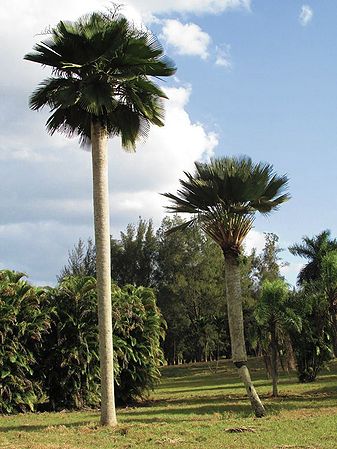
"Copernicia baileyana in the front, Copernicia gigas to the right, and the hedge is Dypsis lutescens." La Habana Botanical Garden, Cuba. Photo by Jason Schoneman.

"Small Coconut and Dypsis lutescens." Medellin, Colombia. (1,500 Mts. or 5,000 feet above see level), Photo by Jeff Anderson.

Medellin, Colombia. (1,500 Mts. or 5,000 feet above see level), Photo by Jeff Anderson.

Garden of the previous KLM-hotel "Plaswijck" in Bangkok, Thailand. Photo by Estoy Unico.

Sunshine coast, Queensland, Australia. Leo Gamble's place. Photo by Paul Latzias.

"Dypsis lutescens, a palm that was not commonly planted until about 20 years ago..." Rushcutter's Bay near the city on Sydney Harbour, Australia. Photo by Daryl O'Connor.

2015. Kyle Wicomb's palms at McCarty Hall, the University of Florida in Gainesville, FL. In ground 2007. Photo by Kyle Wicomb.

Fallbrook, CA. Dypsis Lutescens, Teddy x Triangle Dypsis Hybrid. Photo by Jason Dunn.

Fallbrook, CA. Dypsis Lutescens, Archontohphoenix Tuckerii, Dypsis Leptocheillos x Decaryi (Teddy x Triangle). Photo by Jason Dunn.

New Year 2016 Garden Photos - Cape Coral, FL. Garden of the Golden Canes. Photo by Margaret Price.

"Last week I got an early morning tour of the landscape at Disney's Animal Kingdom. This is in the new 14 acre Pandora section. It is based on the Avatar movie. They have done a spectacular job with the landscaping using many, many unusual and odd plants. They have also added "fake" alien plants and the blend is seamless. The detail of this park is just incredible. In addition to the Caryota obtusa (they planted over 200 of these) which I posted in a separate post, they planted some other nice palms and most aren't the common specimens found here. Bismarckia nobilis, most of these were 25-30ft tall and several were green forms". Dypsis lutescens. Orlando, FL. Photo by H.P. Leu Gardens Botanist Eric S.

Photo-Rare Palm Seeds.com


.jpg)


External Links
- Glossary of Palm Terms
- MODERN BOTANICAL LATIN
- "Just To Be Clear"
- http://www.palmdoctor.com/Palm_0f_The_Month/Dypsis_lutescens.htm
References
Phonetic spelling of Latin names by edric. Edit by João Santos Costa
Special thanks to Geoff Stein, (Palmbob) for his hundreds of photos.
Special thanks to Palmweb.org, Dr. John Dransfield, Dr. Bill Baker & team, for their volumes of information and photos.
Glossary of Palm Terms; Based on the glossary in Dransfield, J., N.W. Uhl, C.B. Asmussen-Lange, W.J. Baker, M.M. Harley & C.E. Lewis. 2008. Genera Palmarum - Evolution and Classification of the Palms. Royal Botanic Gardens, Kew. All images copyright of the artists and photographers (see images for credits).
Dransfield, J. & Beentje, H. 1995. The Palms of Madagascar. Royal Botanic Gardens, Kew and The International Palm Society.
Many Special Thanks to Ed Vaile for his long hours of tireless editing and numerous contributions.