Difference between revisions of "Syagrus cocoides"
| Line 45: | Line 45: | ||
File:Syagrus_cocoides.jpg|Nova Odessa. Photo by Gileno Machado. | File:Syagrus_cocoides.jpg|Nova Odessa. Photo by Gileno Machado. | ||
File:2624e5d4ce6a9ed1340667cd5e4808c5985eeba2.jpg|Sitio Burle Marx, outside Rio de Janeiro, Brazil. Home of the famous artist and landscape designer Roberto Burle Marx. Visited on IPS Biennial tour. Photo by Dr. Scott Zona. | File:2624e5d4ce6a9ed1340667cd5e4808c5985eeba2.jpg|Sitio Burle Marx, outside Rio de Janeiro, Brazil. Home of the famous artist and landscape designer Roberto Burle Marx. Visited on IPS Biennial tour. Photo by Dr. Scott Zona. | ||
| − | |||
| − | |||
| − | |||
File:Syagrus_cocoides_specimen.jpg|Rio de Janeiro Botanical Garden in Brazil. Photo by Paul Craft. | File:Syagrus_cocoides_specimen.jpg|Rio de Janeiro Botanical Garden in Brazil. Photo by Paul Craft. | ||
File:Syagrus_cocoides_specimen2.jpg|Roberto Burle Marx Garden in Brazil. Photo by Paul Craft. | File:Syagrus_cocoides_specimen2.jpg|Roberto Burle Marx Garden in Brazil. Photo by Paul Craft. | ||
Revision as of 21:35, 28 March 2018
| Syagrus (see-AHG-ruhs) cocoides (koh-koh-EE-dehz) | |||||||
|---|---|---|---|---|---|---|---|
 Photo: Rare Palm Seeds.com | |||||||
| Scientific Classification | |||||||
| |||||||
| Synonyms | |||||||
|
| |||||||
| Native Continent | |||||||
 | |||||||
| Morphology | |||||||
| |||||||
| Culture | |||||||
|
| |||||||
| Survivability index | |||||||
|
| |||||||
| Common names | |||||||
|
| |||||||
Contents
Habitat and Distribution
Brazil North, Brazil Northeast, Brazil West-Central, Guyana. Open, rocky areas as well as rain forest, at low elevations. (Field Guide to the Palms of the Americas. by Dr's Henderson A.; Galeano G.; Bernal R.)
Description
Syagrus cocoides is a tall, solitary-stemmed palm, that can grow 1.3 - 9 metres tall. The usually unbranched stem is 6 - 10 cm in diameter, topped by a crown of 14 - 22 leaves each up to 4 metres long, on stems 1 - 3 metres long. (Field Guide to the Palms of the Americas. by Dr's Henderson A.; Galeano G.; Bernal R.)
"Feathery leaves ,very ornamental." (Mauricio Moreira Caixeta)
Culture
Requires a sunny position in a well-drained soil. Cold Hardiness Zone: 10a
Comments and Curiosities
Edible Uses: The seed kernel is a source of pururima oil. We have no more information on the properties or uses of the oil - it is probably edible.
A highly ornamental, midsized palm with a very slender, solitary trunk, 2 to 9 m (7 to 30 ft.) tall and a dense crown of long, slightly plumose leaves with many narrow, arching leaflets. Native to rainforest and woodlands in northern Brazil, S. cocoides prefers a tropical or subtropical/warm temperate climate and can even handle an occasional light freeze. A beautiful, reliable, and very fast and easy growing palm that is suitable even for the small garden. It is still very rare in cultivation. (RPS.com)
- IMAGE GALLERY

Photo by Mauricio Moreira Caixeta.

Photo by Mauricio Moreira Caixeta.

Photo by Mauricio Moreira Caixeta.

Photo by Mauricio Moreira Caixeta.

Photo by Mauricio Moreira Caixeta.

Photo by Mauricio Moreira Caixeta.

Photo by Mauricio Moreira Caixeta.

Nova Odessa. Photo by Gileno Machado.

Sitio Burle Marx, outside Rio de Janeiro, Brazil. Home of the famous artist and landscape designer Roberto Burle Marx. Visited on IPS Biennial tour. Photo by Dr. Scott Zona.

Rio de Janeiro Botanical Garden in Brazil. Photo by Paul Craft.

Roberto Burle Marx Garden in Brazil. Photo by Paul Craft.
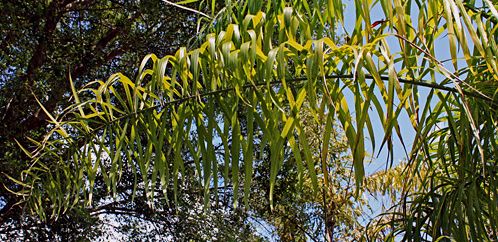
Montgomery Botanical Center in Miami, Florida. Photo by Paul Craft.

Montgomery Botanical Center in Miami, Florida. Photo by Paul Craft.
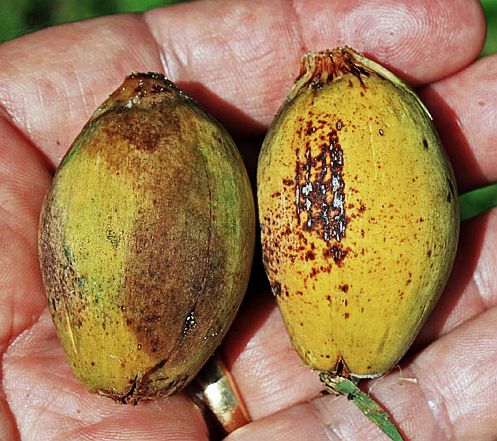
Montgomery Botanical Center in Miami, Florida. Photo by Paul Craft.

Photo: Rare Palm Seeds.com

Photo by Mauricio Moreira Caixeta.

Photo by Mauricio Moreira Caixeta.

Drawing of the leaves, flowers, fruit and seed. Photograph by: Martius, C.F.P. von, Historia Naturalis Palmarum, vol. 2: t. 90 (1839)


External Links
References
Phonetic spelling of Latin names by edric.
Special thanks to Geoff Stein, (Palmbob) for his hundreds of photos.
Special thanks to Palmweb.org, Dr. John Dransfield, Dr. Bill Baker & team, for their volumes of information and photos.
Glossary of Palm Terms; Based on the glossary in Dransfield, J., N.W. Uhl, C.B. Asmussen-Lange, W.J. Baker, M.M. Harley & C.E. Lewis. 2008. Genera Palmarum - Evolution and Classification of the Palms. Royal Botanic Gardens, Kew. All images copyright of the artists and photographers (see images for credits).
Field Guide to the Palms of the Americas. by Dr's Henderson A.; Galeano G.; Bernal R.
Many Special Thanks to Ed Vaile for his long hours of tireless editing and numerous contributions.