Difference between revisions of "Livistona australis"
| (34 intermediate revisions by 2 users not shown) | |||
| Line 1: | Line 1: | ||
__noeditsection__ | __noeditsection__ | ||
{{Palmbox | {{Palmbox | ||
| − | |image= | + | |image=6142526114_e5f67b29a2_o.jpg |
| − | |image_caption= | + | |image_caption=Bundjalung National Park, NE New South Wales, Australia. Photo by Nicholas Turland |
|genus=Livistona (liv-iss-TOH-nah) | |genus=Livistona (liv-iss-TOH-nah) | ||
|species=<br>australis (aw-STRAHL-iss) | |species=<br>australis (aw-STRAHL-iss) | ||
| Line 20: | Line 20: | ||
}} | }} | ||
==Habitat and Distribution== | ==Habitat and Distribution== | ||
| − | Australia. Queensland, New South Wales and Victoria. In the northern part of its range in Queensland confined to high elevation on Paluma Ra., Seaview Ra., Mt Elliot, Mt Abbott, and Eungella Ra. with a major disjunction to Fraser Is., and then more or less continuously at low to moderate elevation south through south-eastern Queensland, through coastal New South Wales and with a minor disjunction to the Brodribb R. in eastern Victoria. Grows in moist areas of open forest, swamp forest, moist sclerophyll forests, along stream banks and in rainforest, 0-1000 m alt. Often locally common and may grow in large colonies. In the north confined to high elevation above 400 m and in central and southern parts in coastal and near-coastal lowland areas. (Dowe, J.L.)/Palmweb. | + | Australia. Queensland, New South Wales and Victoria. In the northern part of its [[File:Livistona_RNP.jpg|thumb|left|450px|Royal national park, Australia.]]range in Queensland confined to high elevation on Paluma Ra., Seaview Ra., Mt Elliot, Mt Abbott, and Eungella Ra. with a major disjunction to Fraser Is., and then more or less continuously at low to moderate elevation south through south-eastern Queensland, through coastal New South Wales and with a minor disjunction to the Brodribb R. in eastern Victoria. Grows in moist areas of open forest, swamp forest, moist sclerophyll forests, along stream banks and in rainforest, 0-1000 m alt. Often locally common and may grow in large colonies. In the north confined to high elevation above 400 m and in central and southern parts in coastal and near-coastal lowland areas. (Dowe, J.L.)/Palmweb. |
| − | + | ||
==Description== | ==Description== | ||
Functionally [[dioecious]] palm. Trunk to 25 m tall, 25-40 cm in diam. breast high, leaf scars raised, internodes broad, brown, longitudinal fissures prominent, petiole stubs retained in the lower 2 m or so, otherwise leaf bases deciduous. Leaves 35-60 in a globose crown; petiole 150-250 cm long, 10-20 mm wide, adaxially moderately ridged, margins smooth or with short single black curved spines congested in the proximal portion, a thin yellowish-green longitudinal stripe present on the abaxial surface; leaf-base fibres prominent, finely woven, sheet-like, persistent; lamina costapalmate, regularly segmented, ± circular, 100-130 cm long, chartaceous, adaxially dark green, glossy, abaxially slightly lighter green, nonwaxy; lamina divided for 49-69% of its length, with 80-100 segments, depth of apical cleft 50-63% of the segment length, apical lobes acute, pendulous; parallel veins 8 each side of midrib; transverse veins thinner than parallel veins. Inflorescences unbranched at the base, not sexually dimorphic, 140-250 cm long, not extending beyond the limit of the crown, branched to 5 orders; partial inflorescences 6-9; peduncular bract(s) lacking; rachis bracts loosely sheathing, densely floccose; rachillae 5-25 mm long, glabrous. Flowers solitary or in clusters of 2-4, funnel-shaped, white to cream to pale yellow; sepals triangular, 1.2-2 mm long, fleshy, acute; petals triangular to ovate, 2-3.5 mm long, fleshy, subacute to obtuse; stamens about 2.5 mm long. Fruit globose, 12- 22 mm in diam., dull reddish-brown to black, occasionally glaucous; epicarp with scattered lenticellular pores; suture line extends almost the length of the fruit; pedicel 2-3 mm long. Seed globose, 10-16 mm wide. Eophyll 5-ribbed. (Dowe, J.L.)/Palmweb. Editing by edric. | Functionally [[dioecious]] palm. Trunk to 25 m tall, 25-40 cm in diam. breast high, leaf scars raised, internodes broad, brown, longitudinal fissures prominent, petiole stubs retained in the lower 2 m or so, otherwise leaf bases deciduous. Leaves 35-60 in a globose crown; petiole 150-250 cm long, 10-20 mm wide, adaxially moderately ridged, margins smooth or with short single black curved spines congested in the proximal portion, a thin yellowish-green longitudinal stripe present on the abaxial surface; leaf-base fibres prominent, finely woven, sheet-like, persistent; lamina costapalmate, regularly segmented, ± circular, 100-130 cm long, chartaceous, adaxially dark green, glossy, abaxially slightly lighter green, nonwaxy; lamina divided for 49-69% of its length, with 80-100 segments, depth of apical cleft 50-63% of the segment length, apical lobes acute, pendulous; parallel veins 8 each side of midrib; transverse veins thinner than parallel veins. Inflorescences unbranched at the base, not sexually dimorphic, 140-250 cm long, not extending beyond the limit of the crown, branched to 5 orders; partial inflorescences 6-9; peduncular bract(s) lacking; rachis bracts loosely sheathing, densely floccose; rachillae 5-25 mm long, glabrous. Flowers solitary or in clusters of 2-4, funnel-shaped, white to cream to pale yellow; sepals triangular, 1.2-2 mm long, fleshy, acute; petals triangular to ovate, 2-3.5 mm long, fleshy, subacute to obtuse; stamens about 2.5 mm long. Fruit globose, 12- 22 mm in diam., dull reddish-brown to black, occasionally glaucous; epicarp with scattered lenticellular pores; suture line extends almost the length of the fruit; pedicel 2-3 mm long. Seed globose, 10-16 mm wide. Eophyll 5-ribbed. (Dowe, J.L.)/Palmweb. Editing by edric. | ||
| Line 30: | Line 29: | ||
Propagation: Seed - sow in early spring in a warm greenhouse, using deep containers in order to avoid root constriction and plating two seeds in each container. The seed of this species has a longer viability than that of most palms. If necessary, thin the seedlings to the best plant and grow them on in the greenhouse for at least two years. If trying them outdoors, plant them out in the summer and give them some protection from the cold for their first few winters. | Propagation: Seed - sow in early spring in a warm greenhouse, using deep containers in order to avoid root constriction and plating two seeds in each container. The seed of this species has a longer viability than that of most palms. If necessary, thin the seedlings to the best plant and grow them on in the greenhouse for at least two years. If trying them outdoors, plant them out in the summer and give them some protection from the cold for their first few winters. | ||
| + | <center> | ||
| + | [[{{PFC}}http://www.palmpedia.net/palmsforcal/index.php5/Livistona_australis]] | ||
| + | </center> | ||
==Comments and Curiosities== | ==Comments and Curiosities== | ||
Phenology: Flowers all year; fruits all year. | Phenology: Flowers all year; fruits all year. | ||
Uses: Young unfolded leaves - raw or cooked. The young and tender leaves are eaten like cabbages. The young leaf buds are often used but, since the plants are unable to produce side-shoots, this effectively kills the plant. The leaves are used for thatching and making hats. They are large and fibrous and can also be used for making baskets, bags, nets etc. | Uses: Young unfolded leaves - raw or cooked. The young and tender leaves are eaten like cabbages. The young leaf buds are often used but, since the plants are unable to produce side-shoots, this effectively kills the plant. The leaves are used for thatching and making hats. They are large and fibrous and can also be used for making baskets, bags, nets etc. | ||
| + | |||
| + | <br clear="all"> | ||
| + | {{#Widget:AdResban}} | ||
| + | <center><gallery caption="IMAGE GALLERY" perrow="" widths="" heights=""> | ||
| + | image:3bada061-61d2-4fb0-8e41-b1819a650d89.jpg|Near Sydney, Australia. Photo by Dr. John Dransfield, Royal Botanic Gardens, Kew/Palmweb. | ||
| + | image:7f45d6e4-8858-4912-898f-f6b70f3f7d24.jpg|Near Sydney, Australia. Photo by Dr. John Dransfield, Royal Botanic Gardens, Kew/Palmweb. | ||
| + | image:B265b45f-c03b-465e-9dfb-fd1e5af302ca.jpg|Royal national Park, New South Wales, Australia. Photo by Dr. John Dransfield, Royal Botanic Gardens, Kew/Palmweb. | ||
| + | image:Livistonia_australis67.jpg|Photo by Rudolf | ||
| + | image:LaDSCN5828_(800x600).jpg|"Growing along the Steve Irwin way up from where I live. These are in natural habitat areas of Beerwah State Forest." (Wal). Sunshine Coast, Hinterland, Queensland, Australia. Photo by Wal | ||
| + | image:LaDSCN5842_(800x600).jpg|"Growing along the Steve Irwin way up from where I live. These are in natural habitat areas of Beerwah State Forest." (Wal). Sunshine Coast, Hinterland, Queensland, Australia. Photo by Wal | ||
| + | image:LaDSCN5845_(800x600).jpg|"Growing along the Steve Irwin way up from where I live. These are in natural habitat areas of Beerwah State Forest." (Wal). Sunshine Coast, Hinterland, Queensland, Australia. Photo by Wal | ||
| + | image:LaDSCN5851_(800x600).jpg|"Growing along the Steve Irwin way up from where I live. These are in natural habitat areas of Beerwah State Forest." (Wal). Sunshine Coast, Hinterland, Queensland, Australia. Photo by Wal | ||
| + | image:LaDSCN5856_(800x600).jpg|"Growing along the Steve Irwin way up from where I live. These are in natural habitat areas of Beerwah State Forest." (Wal). Sunshine Coast, Hinterland, Queensland, Australia. Photo by Wal | ||
| + | image:LaDSCN5861_(800x600).jpg|Archontophoenix cunninghamiana on left. "Growing along the Steve Irwin way up from where I live. These are in natural habitat areas of Beerwah State Forest." (Wal). Sunshine Coast, Hinterland, Queensland, Australia. Photo by Wal | ||
| + | image:LaDSCN5874_(800x600).jpg|"Growing along the Steve Irwin way up from where I live. These are in natural habitat areas of Beerwah State Forest." (Wal). Sunshine Coast, Hinterland, Queensland, Australia. Photo by Wal | ||
| + | image:LaDSCN5884_(600x800).jpg|"Growing along the Steve Irwin way up from where I live. These are in natural habitat areas of Beerwah State Forest." (Wal). Sunshine Coast, Hinterland, Queensland, Australia. Photo by Wal | ||
| + | image:LaDSCN5885_(800x600).jpg|"Growing along the Steve Irwin way up from where I live. These are in natural habitat areas of Beerwah State Forest." (Wal). Sunshine Coast, Hinterland, Queensland, Australia. Photo by Wal | ||
| + | image:LaDSCN5887_(800x600).jpg|"Growing along the Steve Irwin way up from where I live. These are in natural habitat areas of Beerwah State Forest." (Wal). Sunshine Coast, Hinterland, Queensland, Australia. Photo by Wal | ||
| + | image:LaDSCN5898_(800x600).jpg|"Growing along the Steve Irwin way up from where I live. These are in natural habitat areas of Beerwah State Forest." (Wal). Sunshine Coast, Hinterland, Queensland, Australia. Photo by Wal | ||
| + | image:LaDSCN5975_(800x600).jpg|"I asked some passing German tourists to take my pic." (Wal). Beerwah State Forest, Sunshine Coast, Hinterland, Queensland, Australia. Photo by Wal | ||
| + | image:LaDSCN5917_(800x600).jpg|Beerwah State Forest, Sunshine Coast, Hinterland, Queensland, Australia. Photo by Wal | ||
| + | image:LaDSCN5918_(800x600).jpg|Beerwah State Forest, Sunshine Coast, Hinterland, Queensland, Australia. Photo by Wal | ||
| + | image:LaDSCN5949_(800x600).jpg|Beerwah State Forest, Sunshine Coast, Hinterland, Queensland, Australia. Photo by Wal | ||
| + | |||
| + | File:post-42-12775512958703.jpg|Brisbane Botanic Gardens, Mount Coot-tha, Brisbane, Australia. "Growing in a Melaleuca swamp" by Daryl O'Connor. | ||
| + | image:919052.jpg|Huntington Gardens, Pasadena, California. Photo by Geoff Stein | ||
| + | image:4e1cb5.jpg|SoCal. Photo by Geoff Stein | ||
| + | image:87eaa5.jpg|Huntington Beach, California. Photo by Geoff Stein | ||
| + | image:00ccbe.jpg|"Cabbage-tree Palm at Cabbage-tree Creek in Victoria, Australia, January 1988. This is the most southerly natural stand of palm trees in Australia." Photo by kennedyh | ||
| + | image:F9e123.jpg|"Close up of petioles showing typical lime green color and yellowy stripe along bottom" (Geoff Stein) Photo by Geoff Stein | ||
| + | image:19a3a6.jpg|SoCal. Photo by Geoff Stein | ||
| + | image:55e381.jpg|Los Angeles Arboretum. Photo by Geoff Stein | ||
| + | image:Ee1412.jpg|SoCal. Photo by Geoff Stein | ||
| + | image:8427c8.jpg|"Young Australian Cabbage Palm covered in snow in my garden in Victoria, Australia, August 2005" Photo by kennedyh | ||
| + | image:Legrove.jpg | ||
| + | File:palmsk.jpg | ||
| + | File:singletreevp.jpg | ||
| + | File:lehead.jpg | ||
| + | |||
| + | image:D543ca.jpg|SoCal. Photo by Geoff Stein | ||
| + | image:E17632.jpg|SoCal. Photo by Geoff Stein | ||
| + | image:7ba60d.jpg|SoCal. Photo by Geoff Stein | ||
| + | image:Fb182a.jpg|SoCal. Photo by Geoff Stein | ||
| + | image:48699c.jpg|SoCal. Photo by Geoff Stein | ||
| + | image:1d001a.jpg|Photo by Growin | ||
| + | image:Fc8bbd.jpg|San Diego Botanic Garden. Photo by Growin | ||
| + | image:3aa57f.jpg|Los Angeles Arboretum. Photo by Geoff Stein | ||
| + | image:D8ef28.jpg|Los Angeles Arboretum. Photo by Geoff Stein | ||
| + | image:8d26c6.jpg|Huntington Botanical Gardens. Photo by Geoff Stein | ||
| + | image:E70933.jpg|Huntington Botanical Gardens. Photo by Geoff Stein | ||
| + | image:Australis02.jpg|Royal National Park, Australia. Photo by Mike Gray | ||
| + | image:Australis03.jpg|Royal National Park, Australia. Photo by Mike Gray | ||
| + | image:Australis04.jpg|Royal National Park, Australia. Photo by Mike Gray | ||
| + | image:Australis06.jpg|"L. australis grows almost to the shore-line in some parts of the Royal National Park." Photo by Mike Gray | ||
| + | image:Australis08.jpg|"L. australis grows almost to the shore-line in some parts of the Royal National Park." Photo by Mike Gray | ||
| + | image:Livistona_RNP.JPG|Royal National Park, Australia; Near Otford. Photo by Schomynv | ||
| + | image:6142526114_e5f67b29a2_o.jpg|Bundjalung National Park, NE New South Wales, Australia. Photo by Nicholas Turland | ||
| + | image:4859220597_a09c0b7dec_o.jpg | ||
| + | image:La78361353.jpg|Dense eucalypt rainforest; nature park, near the Prince’s Hwy south of Wollongong, New South Wales, Australia. – Scan from color slide, (1979-09-13) Photo by Paul Meir | ||
| + | image:LaIMGP2226.jpg|Tampa, FL. Photo by Brad | ||
| + | image:1559320460_82137c0ac4_o.jpg|West shore of Pittwater (northern outskirts of Sydney), New South Wales. Photo by Dr. Tony Rodd | ||
| + | image:1558441639_cf043e23f4_o.jpg|West shore of Pittwater (northern outskirts of Sydney), New South Wales. Photo by Dr. Tony Rodd | ||
| + | File:post-42-0-30743200-1432207878.jpg|Wollongong Botanical Gardens Palm Collection, 90 minute drive south of Sydney. Livistona australis is the local tree. Photo by Daryl O'Connor. | ||
| + | File:post-7381-0-19229200-1436665603.jpg|Brisbane Botanic Gardens, Mount Coot-tha, Brisbane, Australia. On left. Photo by Paul Latzias. | ||
| + | File:P070246.jpg|In lowland coastal forest north Queensland, Australia. Photo by Dr. John Leslie Dowe. | ||
| + | File:P070248.jpg|In lowland coastal forest north Queensland, Australia. Photo by Dr. John Leslie Dowe. | ||
| + | File:P070247.jpg|In lowland coastal forest north Queensland, Australia. Photo by Dr. John Leslie Dowe. | ||
| + | File:P070249.jpg|In lowland coastal forest north Queensland, Australia. Photo by Dr. John Leslie Dowe. | ||
| + | File:P070250.jpg|In lowland coastal forest north Queensland, Australia. Photo by Dr. John Leslie Dowe. | ||
| + | File:Livistona_RNP.jpg|Royal national park, Australia. | ||
| + | File:1410394054_823cf606cc_b.jpg|Australia. Photo-Black Diamond Images. | ||
| + | File:2177058075_3bd9b75e6a_z.jpg|Cabbage Palm (Livistona australis) in rainforest near Angourie Resort, near Yamba, northern New South Wales. Michael J Barritt. | ||
| + | |||
| + | image:LivAus.jpg|Rare Palm Seeds.com | ||
| + | image:Db7704.jpg|Photo by Geoff Stein | ||
| + | File:la009345764121.JPG | ||
| + | </gallery></center> | ||
==External Links== | ==External Links== | ||
*[http://eunops.org/content/glossary-palm-terms Glossary of Palm Terms] | *[http://eunops.org/content/glossary-palm-terms Glossary of Palm Terms] | ||
| Line 39: | Line 118: | ||
*[http://www.jlhudsonseeds.net/Pronunciation.htm "Just To Be Clear"] | *[http://www.jlhudsonseeds.net/Pronunciation.htm "Just To Be Clear"] | ||
*[http://www.youtube.com/watch?feature=player_embedded&v=LEjJHjikQpg Wal's clip, Beerwah State Forest.] | *[http://www.youtube.com/watch?feature=player_embedded&v=LEjJHjikQpg Wal's clip, Beerwah State Forest.] | ||
| − | * | + | *https://www.youtube.com/watch?v=VEHxDO605FU |
*[http://www.anbg.gov.au/images/photo_cd/index.html Click on Arecaceae, for list of photos] | *[http://www.anbg.gov.au/images/photo_cd/index.html Click on Arecaceae, for list of photos] | ||
*http://keys.trin.org.au/key-server/data/0e0f0504-0103-430d-8004-060d07080d04/media/Html/taxon/Livistona_australis.htm | *http://keys.trin.org.au/key-server/data/0e0f0504-0103-430d-8004-060d07080d04/media/Html/taxon/Livistona_australis.htm | ||
*[http://rbgsyd.nsw.gov.au/__data/assets/pdf_file/0005/73166/Tel8Rod049.pdf Revision of Livistona (Arecaceae) in Australia, By Dr. A.N. Rodd] | *[http://rbgsyd.nsw.gov.au/__data/assets/pdf_file/0005/73166/Tel8Rod049.pdf Revision of Livistona (Arecaceae) in Australia, By Dr. A.N. Rodd] | ||
| − | *[http:// | + | *[http://baa.univpgri-palembang.ac.id/perpus-fkip/Perpustakaan/Geography/Biogeography/%5BJohn_Leslie_Dowe%5D_Australian_Palms_Biogeography,(BookFi.org).pdf Australian Palms, By John Leslie Dowe] |
==References== | ==References== | ||
Phonetic spelling of Latin names by edric. | Phonetic spelling of Latin names by edric. | ||
| Line 55: | Line 134: | ||
Dowe, J.L. A taxonomic account of Livistona R.Br. (Arecaceae). | Dowe, J.L. A taxonomic account of Livistona R.Br. (Arecaceae). | ||
| − | |||
| − | |||
| − | |||
| − | |||
| − | |||
| − | |||
| − | |||
| − | |||
| − | |||
| − | |||
| − | |||
| − | |||
| − | |||
| − | |||
| − | |||
| − | |||
| − | |||
| − | |||
| − | |||
| − | |||
| − | |||
| − | |||
| − | |||
| − | |||
| − | |||
| − | |||
| − | |||
| − | |||
| − | |||
| − | |||
| − | |||
| − | |||
| − | |||
| − | |||
| − | |||
| − | |||
| − | |||
| − | |||
| − | |||
| − | |||
| − | |||
| − | |||
| − | |||
| − | |||
| − | |||
| − | |||
| − | |||
| − | |||
| − | |||
| − | |||
| − | |||
| − | |||
| − | |||
| − | |||
| − | |||
| − | |||
| − | |||
| − | |||
| − | |||
| − | |||
| − | |||
{{SpeciesListBackLink}} | {{SpeciesListBackLink}} | ||
[[Category:LIVISTONA|australis]] | [[Category:LIVISTONA|australis]] | ||
Latest revision as of 14:25, 30 January 2016
| Livistona (liv-iss-TOH-nah) australis (aw-STRAHL-iss) | |||||||
|---|---|---|---|---|---|---|---|
 Bundjalung National Park, NE New South Wales, Australia. Photo by Nicholas Turland | |||||||
| Scientific Classification | |||||||
| |||||||
| Synonyms | |||||||
|
| |||||||
| Native Continent | |||||||
 | |||||||
| Morphology | |||||||
| |||||||
| Culture | |||||||
|
| |||||||
| Survivability index | |||||||
|
| |||||||
| Common names | |||||||
|
| |||||||
Contents
Habitat and Distribution
Australia. Queensland, New South Wales and Victoria. In the northern part of its
Description
Functionally dioecious palm. Trunk to 25 m tall, 25-40 cm in diam. breast high, leaf scars raised, internodes broad, brown, longitudinal fissures prominent, petiole stubs retained in the lower 2 m or so, otherwise leaf bases deciduous. Leaves 35-60 in a globose crown; petiole 150-250 cm long, 10-20 mm wide, adaxially moderately ridged, margins smooth or with short single black curved spines congested in the proximal portion, a thin yellowish-green longitudinal stripe present on the abaxial surface; leaf-base fibres prominent, finely woven, sheet-like, persistent; lamina costapalmate, regularly segmented, ± circular, 100-130 cm long, chartaceous, adaxially dark green, glossy, abaxially slightly lighter green, nonwaxy; lamina divided for 49-69% of its length, with 80-100 segments, depth of apical cleft 50-63% of the segment length, apical lobes acute, pendulous; parallel veins 8 each side of midrib; transverse veins thinner than parallel veins. Inflorescences unbranched at the base, not sexually dimorphic, 140-250 cm long, not extending beyond the limit of the crown, branched to 5 orders; partial inflorescences 6-9; peduncular bract(s) lacking; rachis bracts loosely sheathing, densely floccose; rachillae 5-25 mm long, glabrous. Flowers solitary or in clusters of 2-4, funnel-shaped, white to cream to pale yellow; sepals triangular, 1.2-2 mm long, fleshy, acute; petals triangular to ovate, 2-3.5 mm long, fleshy, subacute to obtuse; stamens about 2.5 mm long. Fruit globose, 12- 22 mm in diam., dull reddish-brown to black, occasionally glaucous; epicarp with scattered lenticellular pores; suture line extends almost the length of the fruit; pedicel 2-3 mm long. Seed globose, 10-16 mm wide. Eophyll 5-ribbed. (Dowe, J.L.)/Palmweb. Editing by edric.
Culture
Suitable for: light sandy, medium loamy and heavy clay soils. Suitable pH: acid, neutral and basic alkaline soils. It can grow in semi-shade, light woodland or no shade. It prefers dry or moist soil.
Requires a sheltered position in a fertile moist but well-drained soil that is preferably neutral to acid. Although plants prefer a deep moist soil, they can also succeed in dry climates. Succeeds in full sun or partial shade. Plants naturally grow in forest habitats and, especially when young, require some shade from the sun for at least part of the day. This species is not very hardy in Britain where it usually requires greenhouse protection. Plants are hardy to at least -7°c in Australian gardens, though this cannot be translated directly to British gardens because of our cooler summers and longer colder and wetter winters. Plants have been known to tolerate temperatures down to at least 0°c for short periods, they are also very amenable to pot cultivation and can be grown successfully in containers for many years. Palms usually have deep penetrating root systems and generally establish best when planted out at a young stage. However, older plants are substantially more cold tolerant than juvenile plants. In areas at the limit of their cold tolerance, therefore, it is prudent to grow the plants in containers for some years, giving them winter protection, and only planting them into their permanent positions when sheer size dictates. Palms can also be transplanted even when very large. Although the thick fleshy roots are easily damaged and/or desiccated, new roots are generally freely produced. It is important to stake the plant very firmly to prevent rock, and also to give it plenty of water until re-established - removing many of the leaves can also help. Plants are slow-growing.
Propagation: Seed - sow in early spring in a warm greenhouse, using deep containers in order to avoid root constriction and plating two seeds in each container. The seed of this species has a longer viability than that of most palms. If necessary, thin the seedlings to the best plant and grow them on in the greenhouse for at least two years. If trying them outdoors, plant them out in the summer and give them some protection from the cold for their first few winters.

Comments and Curiosities
Phenology: Flowers all year; fruits all year.
Uses: Young unfolded leaves - raw or cooked. The young and tender leaves are eaten like cabbages. The young leaf buds are often used but, since the plants are unable to produce side-shoots, this effectively kills the plant. The leaves are used for thatching and making hats. They are large and fibrous and can also be used for making baskets, bags, nets etc.
- IMAGE GALLERY

Near Sydney, Australia. Photo by Dr. John Dransfield, Royal Botanic Gardens, Kew/Palmweb.

Near Sydney, Australia. Photo by Dr. John Dransfield, Royal Botanic Gardens, Kew/Palmweb.

Royal national Park, New South Wales, Australia. Photo by Dr. John Dransfield, Royal Botanic Gardens, Kew/Palmweb.

Photo by Rudolf

"Growing along the Steve Irwin way up from where I live. These are in natural habitat areas of Beerwah State Forest." (Wal). Sunshine Coast, Hinterland, Queensland, Australia. Photo by Wal

"Growing along the Steve Irwin way up from where I live. These are in natural habitat areas of Beerwah State Forest." (Wal). Sunshine Coast, Hinterland, Queensland, Australia. Photo by Wal

"Growing along the Steve Irwin way up from where I live. These are in natural habitat areas of Beerwah State Forest." (Wal). Sunshine Coast, Hinterland, Queensland, Australia. Photo by Wal

"Growing along the Steve Irwin way up from where I live. These are in natural habitat areas of Beerwah State Forest." (Wal). Sunshine Coast, Hinterland, Queensland, Australia. Photo by Wal

"Growing along the Steve Irwin way up from where I live. These are in natural habitat areas of Beerwah State Forest." (Wal). Sunshine Coast, Hinterland, Queensland, Australia. Photo by Wal

Archontophoenix cunninghamiana on left. "Growing along the Steve Irwin way up from where I live. These are in natural habitat areas of Beerwah State Forest." (Wal). Sunshine Coast, Hinterland, Queensland, Australia. Photo by Wal

"Growing along the Steve Irwin way up from where I live. These are in natural habitat areas of Beerwah State Forest." (Wal). Sunshine Coast, Hinterland, Queensland, Australia. Photo by Wal

"Growing along the Steve Irwin way up from where I live. These are in natural habitat areas of Beerwah State Forest." (Wal). Sunshine Coast, Hinterland, Queensland, Australia. Photo by Wal

"Growing along the Steve Irwin way up from where I live. These are in natural habitat areas of Beerwah State Forest." (Wal). Sunshine Coast, Hinterland, Queensland, Australia. Photo by Wal

"Growing along the Steve Irwin way up from where I live. These are in natural habitat areas of Beerwah State Forest." (Wal). Sunshine Coast, Hinterland, Queensland, Australia. Photo by Wal

"Growing along the Steve Irwin way up from where I live. These are in natural habitat areas of Beerwah State Forest." (Wal). Sunshine Coast, Hinterland, Queensland, Australia. Photo by Wal

"I asked some passing German tourists to take my pic." (Wal). Beerwah State Forest, Sunshine Coast, Hinterland, Queensland, Australia. Photo by Wal

Beerwah State Forest, Sunshine Coast, Hinterland, Queensland, Australia. Photo by Wal

Beerwah State Forest, Sunshine Coast, Hinterland, Queensland, Australia. Photo by Wal

Beerwah State Forest, Sunshine Coast, Hinterland, Queensland, Australia. Photo by Wal

Brisbane Botanic Gardens, Mount Coot-tha, Brisbane, Australia. "Growing in a Melaleuca swamp" by Daryl O'Connor.

Huntington Gardens, Pasadena, California. Photo by Geoff Stein

SoCal. Photo by Geoff Stein

Huntington Beach, California. Photo by Geoff Stein

"Cabbage-tree Palm at Cabbage-tree Creek in Victoria, Australia, January 1988. This is the most southerly natural stand of palm trees in Australia." Photo by kennedyh

"Close up of petioles showing typical lime green color and yellowy stripe along bottom" (Geoff Stein) Photo by Geoff Stein

SoCal. Photo by Geoff Stein

Los Angeles Arboretum. Photo by Geoff Stein

SoCal. Photo by Geoff Stein

"Young Australian Cabbage Palm covered in snow in my garden in Victoria, Australia, August 2005" Photo by kennedyh


SoCal. Photo by Geoff Stein

SoCal. Photo by Geoff Stein

SoCal. Photo by Geoff Stein

SoCal. Photo by Geoff Stein

SoCal. Photo by Geoff Stein

Photo by Growin

San Diego Botanic Garden. Photo by Growin

Los Angeles Arboretum. Photo by Geoff Stein

Los Angeles Arboretum. Photo by Geoff Stein

Huntington Botanical Gardens. Photo by Geoff Stein

Huntington Botanical Gardens. Photo by Geoff Stein
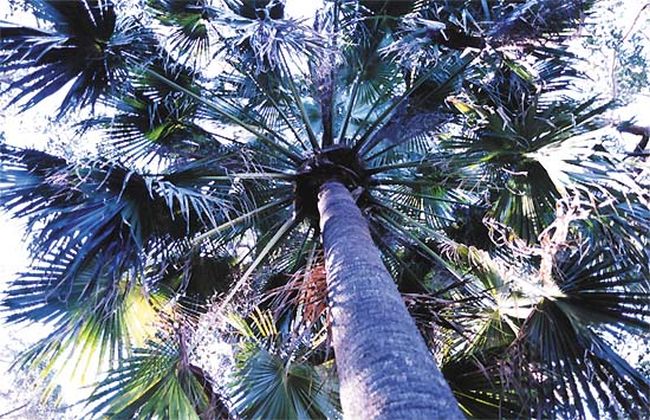
Royal National Park, Australia. Photo by Mike Gray
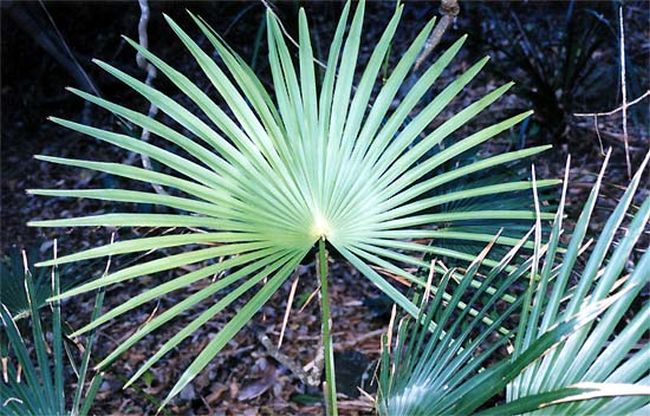
Royal National Park, Australia. Photo by Mike Gray
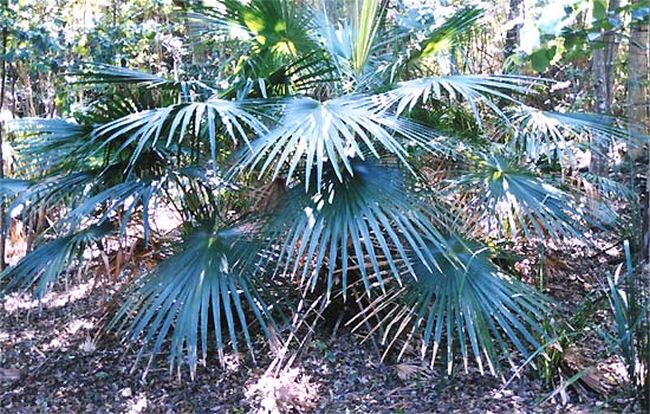
Royal National Park, Australia. Photo by Mike Gray
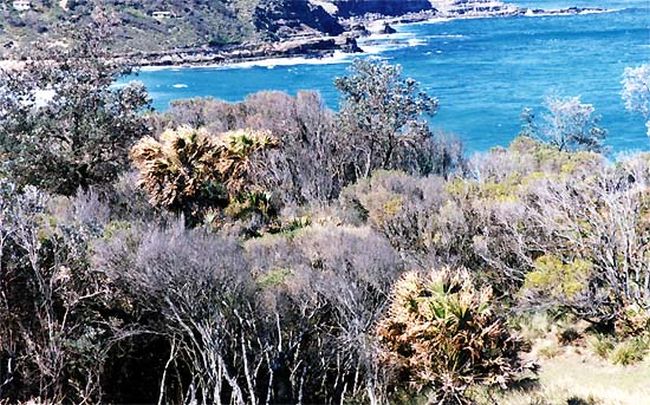
"L. australis grows almost to the shore-line in some parts of the Royal National Park." Photo by Mike Gray

"L. australis grows almost to the shore-line in some parts of the Royal National Park." Photo by Mike Gray

Royal National Park, Australia; Near Otford. Photo by Schomynv

Bundjalung National Park, NE New South Wales, Australia. Photo by Nicholas Turland


Dense eucalypt rainforest; nature park, near the Prince’s Hwy south of Wollongong, New South Wales, Australia. – Scan from color slide, (1979-09-13) Photo by Paul Meir

Tampa, FL. Photo by Brad

West shore of Pittwater (northern outskirts of Sydney), New South Wales. Photo by Dr. Tony Rodd

West shore of Pittwater (northern outskirts of Sydney), New South Wales. Photo by Dr. Tony Rodd

Wollongong Botanical Gardens Palm Collection, 90 minute drive south of Sydney. Livistona australis is the local tree. Photo by Daryl O'Connor.

Brisbane Botanic Gardens, Mount Coot-tha, Brisbane, Australia. On left. Photo by Paul Latzias.

In lowland coastal forest north Queensland, Australia. Photo by Dr. John Leslie Dowe.

In lowland coastal forest north Queensland, Australia. Photo by Dr. John Leslie Dowe.

In lowland coastal forest north Queensland, Australia. Photo by Dr. John Leslie Dowe.

In lowland coastal forest north Queensland, Australia. Photo by Dr. John Leslie Dowe.

In lowland coastal forest north Queensland, Australia. Photo by Dr. John Leslie Dowe.

Royal national park, Australia.

Australia. Photo-Black Diamond Images.

Cabbage Palm (Livistona australis) in rainforest near Angourie Resort, near Yamba, northern New South Wales. Michael J Barritt.

Rare Palm Seeds.com

Photo by Geoff Stein


.jpg)
.jpg)
.jpg)
.jpg)
.jpg)
.jpg)
.jpg)
.jpg)
.jpg)
.jpg)
.jpg)
.jpg)
.jpg)
.jpg)
.jpg)


External Links
- Glossary of Palm Terms
- MODERN BOTANICAL LATIN
- "Just To Be Clear"
- Wal's clip, Beerwah State Forest.
- https://www.youtube.com/watch?v=VEHxDO605FU
- Click on Arecaceae, for list of photos
- http://keys.trin.org.au/key-server/data/0e0f0504-0103-430d-8004-060d07080d04/media/Html/taxon/Livistona_australis.htm
- Revision of Livistona (Arecaceae) in Australia, By Dr. A.N. Rodd
- Australian Palms, By John Leslie Dowe
References
Phonetic spelling of Latin names by edric.
Special thanks to Geoff Stein, (Palmbob) for his hundreds of photos.
Special thanks to Palmweb.org, Dr. John Dransfield, Dr. Bill Baker & team, for their volumes of information and photos.
Glossary of Palm Terms; Based on the glossary in Dransfield, J., N.W. Uhl, C.B. Asmussen-Lange, W.J. Baker, M.M. Harley & C.E. Lewis. 2008. Genera Palmarum - Evolution and Classification of the Palms. Royal Botanic Gardens, Kew. All images copyright of the artists and photographers (see images for credits).
Dowe, J.L. A taxonomic account of Livistona R.Br. (Arecaceae).
Many Special Thanks to Ed Vaile for his long hours of tireless editing and numerous contributions.