Pronunciation: lih-no-SPAY-dix MY-nor
Common Name: none
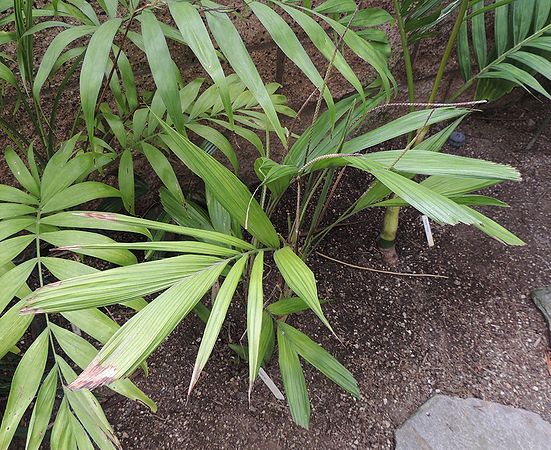
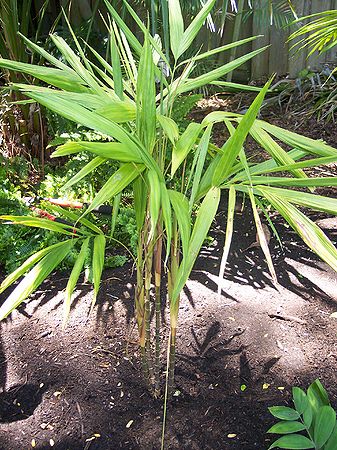
Linospadix minor is not a terribly popular species so far in California, but it seems to perform pretty well in the best climates here and probably should be grown more often. It is a suckering Australian species that looks a bit like a Chamaedorea.
|
Appearance and Biology
- Habit: clustering with a crown of 3-5 feather leaves
- Height: 6'
- Trunk: multiple; 1" in diameter; light green to grey with age; prominently ringed
- Crownshaft: pseudocrownshaft; 4" tall, consisting of multiple leaf bases that each only partly cover stem; very pale green
- Spread: 2'+
- Leaf Description: pinnate; flat; terminal leaflets wider than the rest; light green; 3' long; very upright in orientation
- Petiole/Leaf bases: very thin; unarmed; un-split leaf bases
- Reproduction: monoecious
- Inflorescence: 2' long; from within leaves; sometimes multiple
- Fruit: eliptical; bright red when ripe; 1/2" long
|
Horticultural Characteristics
- Minimum Temp: 28F
- Drought Tolerance: low
- Dry Heat Tolerance: moderate
- Cool Tolerance: low to moderate
- Wind Tolerance: low
- Salt Tolerance: unknown
- Growth Rate: very slow to slow with age
- Soil Preference: adaptable, but moist
- Light Requirement: filtered to partial sun near coast
- Human Hazards: none
- Disease or Horticultural Problems: none
- Transplants?: unknown
- Indoor?: unknown
- Availability: rare
|
4Huntington Beach, California
San Diego county, California
flowering in Huntington Beach