Pronunciation: wall-LICK-ee-uh DIS-tick-uh/dis-TICK-uh
Common Name: Tashe Palm
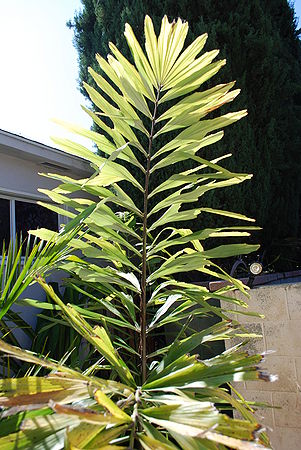
Wallichia disticha is a moderately popular palm to grow in California that does quite well in a wide range of climates, but one that does not tend to live terribly long (monocarpic- dies once flowers). But it is a fascinating and peculiar plant in that it grows in mostly two dimensions, look very impressive and very ornamental in one plane, but nearly flat and nondescript at a 90 degree turn. It is a pretty hardy and easy to grow plant and definitely an attention-getter in the garden.
|
Appearance and Biology
- Habit: solitary with a crown of 12-18 feather leaves
- Height: 20' (most do not make it that tall, though)
- Trunk: single; 10" x 5" (trunks flattened somewhat); covered in thick layer of very thick fiber strands and leaf bases on two sides (the widest ones)
- Crownshaft: none
- Spread: 10'-12' in one direction, 2' in the other
- Leaf Description: pinnate; plumose; elongated fishtail leaflets with premorse tips; leaves in two ranked only (distichous); 6'-8' long; arching with upright-oriented leaflets in a 'V' of two different ranks; underside of leaves a bit less dark than above; leaves usually a medium to slightly yellow-green
- Petiole/Leaf bases: 12"-18"; nearly tubular; unarmed; retained on trunk usually for life; un-split
- Reproduction: monoecious; monocarpic
- Inflorescence: terminal, arising from between last two leafs; drooping downward; highly branched; 6'-8' long; dark red to purplish brown; can last for over a year- plants that flower have maybe up to two years left to live
- Fruit: dull red when ripe; toxic (oxalates)
|
Horticultural Characteristics
- Minimum Temp: 27F
- Drought Tolerance: fair
- Dry Heat Tolerance: unknown
- Wind Tolerance: poor
- Salt Tolerance: unknown
- Growth Rate: slow
- Soil Preference: widely adaptable, tolerating heavy clays
- Light Requirement: partial to full sun
- Human Hazards: mildly toxic fruits (oxalates) and painful to chew; potentially irritating to crush and get juices on skin
- Disease or Horticultural Problems: short lived; leaves tend to brown tip and be yellowy in windy conditions
- Transplants?: unknown
- Indoor?: unlikely to do well indoors
- Availability: rare, but available off/on at palm specialty nurseries
|