Trithrinax campestris
Geoff Stein - Author & Editor
Revision as of 18:33, 19 August 2014 by Geoff_blocked_old (Talk | contribs)
Common Name: Caranday Palm
Trithrinax campestris is an eye-catching, suckering palmate species with a good deal of durability for a variety of southern California climates.
|
Appearance and Biology
|
Horticultural Characteristics
|

San Barbara, California
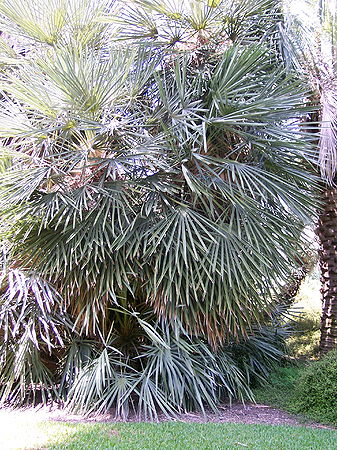
Huntington gardens, California

Los Angeles arboretum

San Diego county, California

Los Angeles arboretum

Los Angeles arboretum

Santa Monica mountains, California

Ventura, California

Ventura California

Huntington gardens

Palm Desert, California
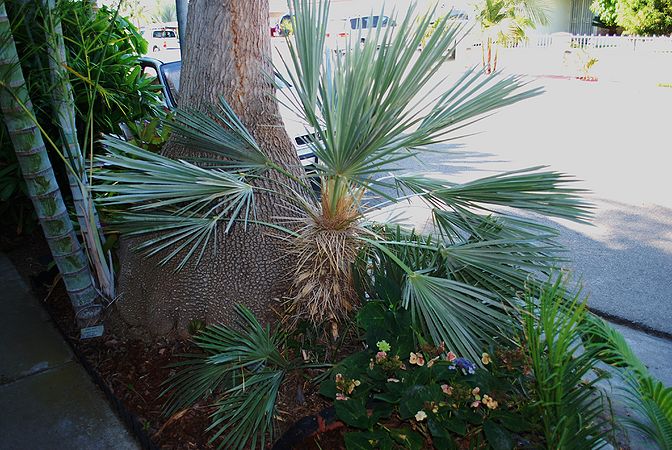
Orange county, California in too much shade

10 year juvenile, Ventura county, California

skirt of dead leaves

leaves showing sharp tips

leaf shot

leaf shot

leaf tips

close up of leaf tip

young palm, Los Angeles arboretum
leaf shot

Santa Barbara, California showing suckering appearance
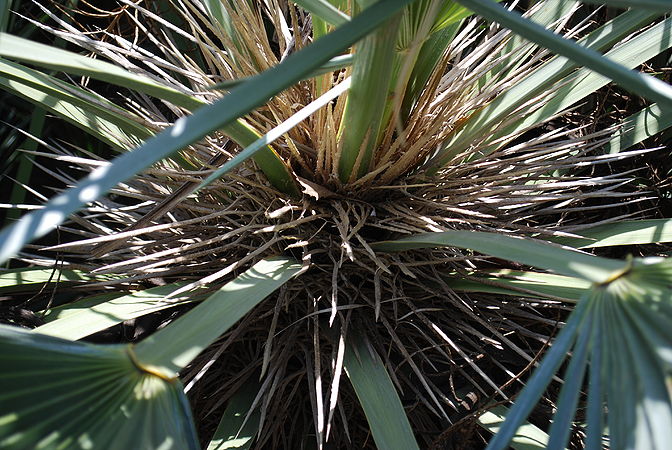
spines at leaf bases
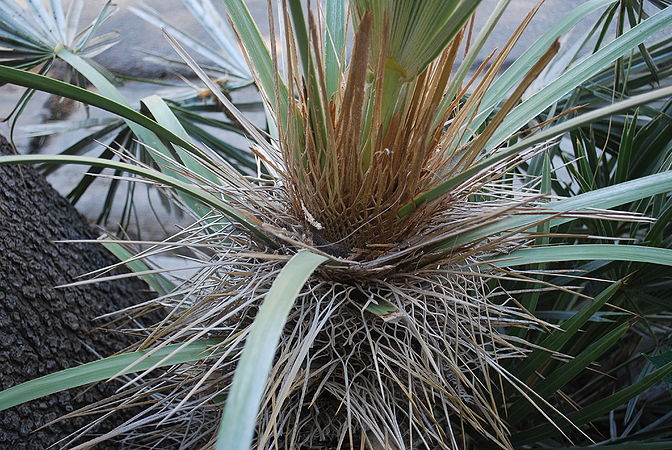
upper stem spines

showing pleats in leaves

cleaned trunk

flowering palm in Huntington gardens, California, October

close up of flowers


.JPG)


