Difference between revisions of "Zombia antillarum"
Geoff Stein - Author & Editor
| Line 4: | Line 4: | ||
</center> | </center> | ||
'''''Zombia antillarum''''' is a fairly marginal palm for California, but some have manage to grow it for many years (no adult palms in the state at this time). It is one of the more slow growing palms one can keep alive in California. This is a unique, clustering species with very ornamental spination along the trunk covered with a large, tan, tight fibrous mesh and pronounced rings. | '''''Zombia antillarum''''' is a fairly marginal palm for California, but some have manage to grow it for many years (no adult palms in the state at this time). It is one of the more slow growing palms one can keep alive in California. This is a unique, clustering species with very ornamental spination along the trunk covered with a large, tan, tight fibrous mesh and pronounced rings. | ||
| − | + | <center> | |
{| colspan="2" style="background: #FCFCFC; border: 1px solid black; vertical-align: top;" | | {| colspan="2" style="background: #FCFCFC; border: 1px solid black; vertical-align: top;" | | ||
| style="width: 50%; background: #f8e8df; border: 1px solid black; vertical-align: top;" | | | style="width: 50%; background: #f8e8df; border: 1px solid black; vertical-align: top;" | | ||
| Line 37: | Line 37: | ||
*'''Availability''': very rare | *'''Availability''': very rare | ||
|} | |} | ||
| + | {{#Widget:AdResBan}} | ||
<gallery> | <gallery> | ||
File:Zombia Ha.JPG|San Diego county, California seedling | File:Zombia Ha.JPG|San Diego county, California seedling | ||
Revision as of 22:48, 12 August 2015
Common Name: Zombie Palm
Zombia antillarum is a fairly marginal palm for California, but some have manage to grow it for many years (no adult palms in the state at this time). It is one of the more slow growing palms one can keep alive in California. This is a unique, clustering species with very ornamental spination along the trunk covered with a large, tan, tight fibrous mesh and pronounced rings.
|
Appearance and Biology
|
Horticultural Characteristics
|

San Diego county, California seedling
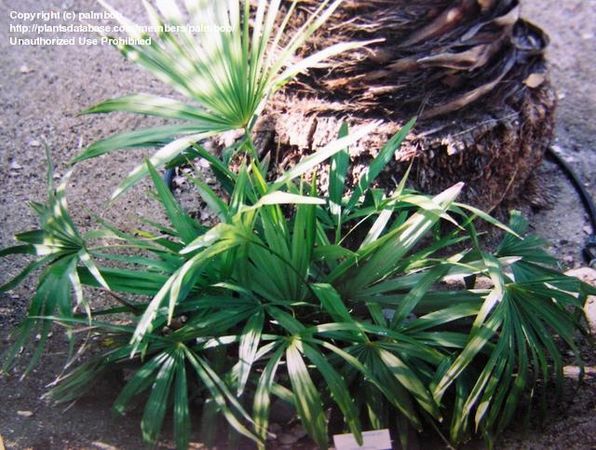
Palm Desert seedling, California

Montgomery foundation, Miami, Florida

seedling in Hawaii

Orlando Florida, Leu Gardens

suckers off palm in Florida

spiny stems of mature palm, Florida


