Difference between revisions of "Trithrinax campestris"
Geoff Stein - Author & Editor
| Line 18: | Line 18: | ||
*'''Reproduction''': monoecious | *'''Reproduction''': monoecious | ||
*'''Inflorescence''': 18" multibranched with bright yellow flowers | *'''Inflorescence''': 18" multibranched with bright yellow flowers | ||
| − | *'''Fruit''': | + | *'''Fruit''': 1/2" diameter bright green to darker when ripening |
| − | *'''Seed''': | + | *'''Seed''': nearly 1/2", dark brown and spherical |
| style="width: 50%; background: #f8e8df; border: 1px solid black; vertical-align: top;" | | | style="width: 50%; background: #f8e8df; border: 1px solid black; vertical-align: top;" | | ||
<div style="background: #e5a178; border: 1px solid black; padding: 5px; margin: 3px; font-weight: bold; text-align: center; font-size: 120%;">Horticultural Characteristics</div> | <div style="background: #e5a178; border: 1px solid black; padding: 5px; margin: 3px; font-weight: bold; text-align: center; font-size: 120%;">Horticultural Characteristics</div> | ||
Latest revision as of 16:02, 24 September 2016
Common Name: Caranday Palm
Trithrinax campestris is an eye-catching, suckering palmate species with a good deal of durability for a variety of southern California climates. Some palms have amazing silvery leaves that make great specimens for sunny gardens. Plants should be planted far from traffic as leaves are extremely sharp and hazardous. Very good palm for the desert as well as near the coast. Grows better in California than most other climates throughout the US (probably be a good plant for Arizona gardens), though does well in most all climates palms can be grown in, other than the really cold ones.
|
Appearance and Biology
|
Horticultural Characteristics
|

San Barbara, California
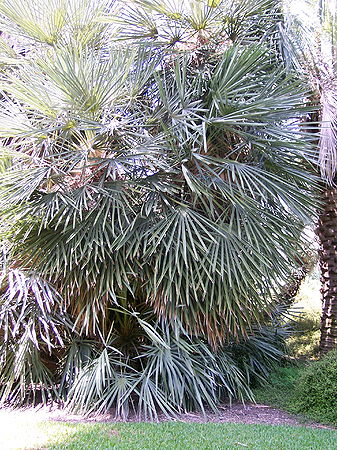
Huntington gardens, California

Los Angeles arboretum

San Diego county, California

Los Angeles arboretum

Los Angeles arboretum

Santa Monica mountains, California

Ventura, California

Ventura California

Huntington gardens

Palm Desert, California
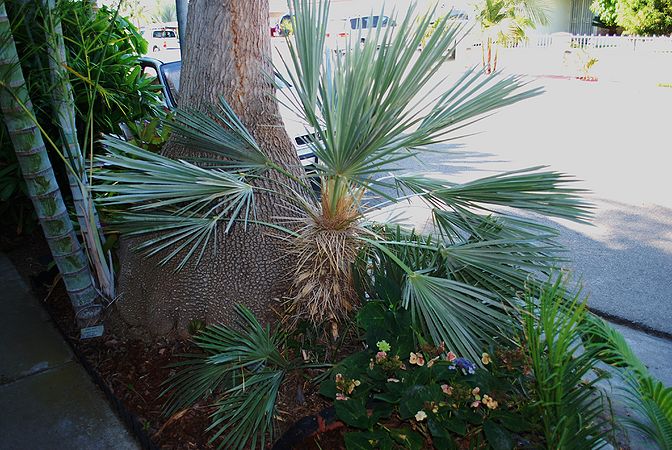
Orange county, California in too much shade

10 year juvenile, Ventura county, California

skirt of dead leaves

leaves showing sharp tips

leaf shot

leaf shot

leaf tips

close up of leaf tip

young palm, Los Angeles arboretum
leaf shot

Santa Barbara, California showing suckering appearance
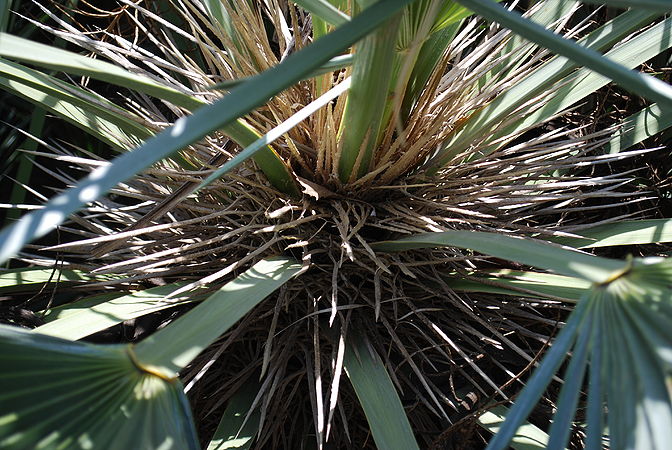
spines at leaf bases
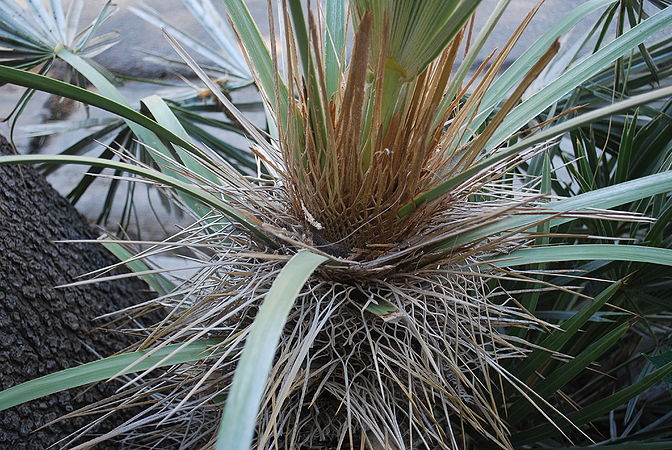
upper stem spines

showing pleats in leaves

cleaned trunk

large tree in flower in September, Huntington Gardens

flowering palm in Huntington gardens, California, October

close up of flowers

fruits on palm in Los Angeles arboretum in late summer


.JPG)


