Difference between revisions of "Lanonia dasyantha"
Geoff Stein - Author & Editor
| Line 6: | Line 6: | ||
Synonym: ''Licuala radula'' | Synonym: ''Licuala radula'' | ||
| − | + | <center> | |
{| colspan="2" style="background: #FCFCFC; border: 1px solid black; vertical-align: top;" | | {| colspan="2" style="background: #FCFCFC; border: 1px solid black; vertical-align: top;" | | ||
| style="width: 50%; background: #f8e8df; border: 1px solid black; vertical-align: top;" | | | style="width: 50%; background: #f8e8df; border: 1px solid black; vertical-align: top;" | | ||
| Line 39: | Line 39: | ||
*'''Availability''': very rare | *'''Availability''': very rare | ||
|} | |} | ||
| + | {{#Widget:AdResBan}} | ||
<gallery> | <gallery> | ||
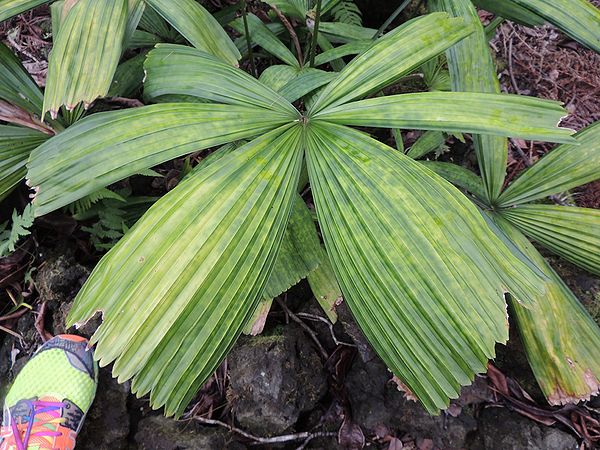
File:Licuala radula 2.jpg|all photos from Hawaii, unless labeled otherwise | File:Licuala radula 2.jpg|all photos from Hawaii, unless labeled otherwise | ||
Latest revision as of 12:15, 18 August 2015
Common Name: Vietnamese Paradise Palm
Lanonia dasyantha was, until the early 2000s, known as Licuala radula and many will still know at such. It is the only mottled Licuala-like palm that can survive outdoors in California (so far) and some enthusiasts of had success with this palm in their gardens here. There was a lot of excitement about this palm in the late 1990s, but it has turned out to a bit tougher to keep happy than was at first thought. But it still exists in some gardens, though it is unlikely any will produce viable flowers
Synonym: Licuala radula
|
Appearance and Biology
|
Horticultural Characteristics
|

all photos from Hawaii, unless labeled otherwise


Nong Nooth Tropical gardens, Thailand


Pauleen Sullivan estate, Hawaii

PIercy garden