Pronunciation: prih-CHAR-dee-uh lah-nih-JAIR-uh
Common Name: Wooly Loulu Palm
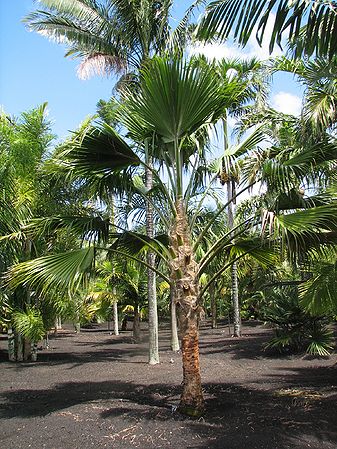
Pritchardia lanigera is another Pritchardia that seems to do pretty well in California, though not terribly unique, other than it's 'wooly-coated' inflorescences (rarely seen in California). More commonly grown in California under the synonym Pritchardia eriostachya.
Synonym: Pritchardia eriostachya
|
Appearance and Biology
- Habit: solitary with crown of 12-15 fan leaves
- Height: 25' estimate
- Trunk: single; 10"-14"; smooth, grey
- Crownshaft: none
- Spread: 10'-12'
- Leaf Description: palmate to barely costapalmate; moderately pleated blades; up to 5' across; glossy green; 6' long (half of that petiole); Leaves tend to be droopy in California, compared to how they look in Hawaii; semicircular; sometimes small petticoat of dead leaves persists
- Petiole/Leaf bases: 3' long; unarmed; edges have some fiber along them; un-split leaf bases retained on trunks for several years
- Reproduction: monoecious
- Inflorescence: unbranched; upright to pendulous; from within leaves; 3' long; flowers covered with pinkish wooly fibers
- Fruit: oblong to spherical; 2" thick; dark green to blackish when ripe
|
Horticultural Characteristics
- Minimum Temp: 29F
- Drought Tolerance: low
- Dry Heat Tolerance: moderate
- Cool Tolerance: low
- Wind Tolerance: low to moderate
- Salt Tolerance: unknown
- Growth Rate: slow
- Soil Preference: adaptable
- Light Requirement: shade to filtered sun
- Human Hazards: none
- Disease or Horticultural Problems: none known
- Transplants?: unknown
- Indoor?: unknown
- Availability: rare to very rare
|
Huntington botanical gardens near Pasadena, California




.JPG)

