Prestoea acuminata var. montana
Geoff Stein - Author & Editor
Common Name:
Prestoea acuminata var. montana is the only Prestoea that seems to be hardy enough to grow well in California. This is the non-suckering form of this species. It seems highly unlikely this is indeed the same species as the suckering form as they look so unalike, not to mention they are a world apart in terms of cultivational needs. Takes the definition of species over the top. Mature, fruiting plants in California. Makes a great tropical looking specimen palm for the right location.
|
Appearance and Biology
|
Horticultural Characteristics
|
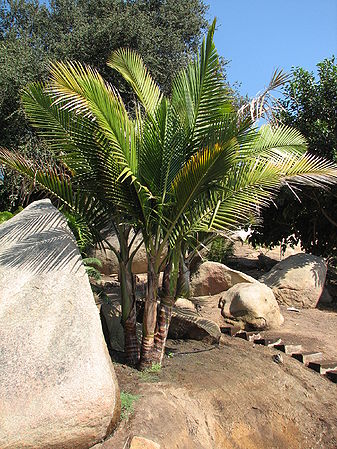
San Diego county, inland, California

Orange county, California
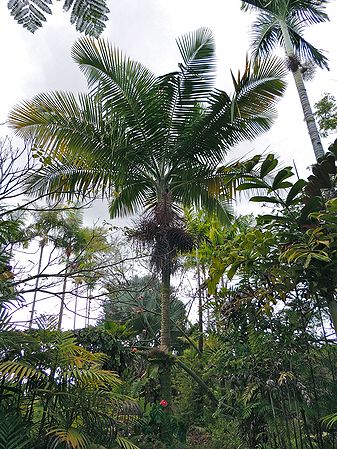
Hawaii
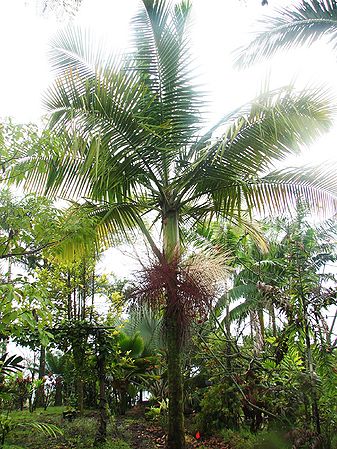
Hawaii

Hawaii

Hawaii, Floribunda Palms

young palm, Huntington Beach, California

crownshaft of palm in Orange county, Calfornia

Hawaii

Orange county, California

Orange county, flower spathe

Huntington Beach, California

Hawaii

juvenile palm, California

flower spathe close up

flowers close up, Hawaii

fruits in California

ripe fruit, California


