Coccothrinax crinita
Geoff Stein - Author & Editor
Common Name: Old Man Palm
Coccothrinax crinta is one of the more commonly grown Coccothrinax in California, but also one of the slowest palms that grow well here. Ultimate height is only an estimate and no palms are even close to full height at this time, in California. Ornamental thick, hair-like mane of fiber covering entire trunk surface, making trunk seem much thicker than it is. The 'Cousin It' of palms. Coccothrinax crinita var. brevicrinus is a form sans hairy fibers, but faster growing (see separate entry).
|
Appearance and Biology
|
Horticultural Characteristics
|

small palm in San Diego county, already with hair-covered trunk

Hawaii

Hawaii, Lundkvist estate

Fairchild Tropical Gardens, Miami, Florida

Hawaii, Lundkvist estate

Hawaii
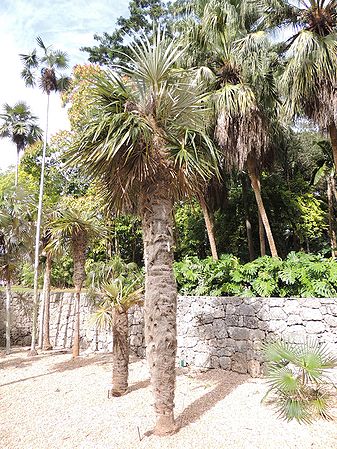
Fairchild Gardens

Hawaii, Lundkvist estate

Hawaii, Lundkvist estate

Hawaii

Florida, Fairchild tropical gardens

leaf shot

trunk in Hawaii

hairy trunk

variety brevicrinus, Fairchild, Miami

seedling

another seedling view


