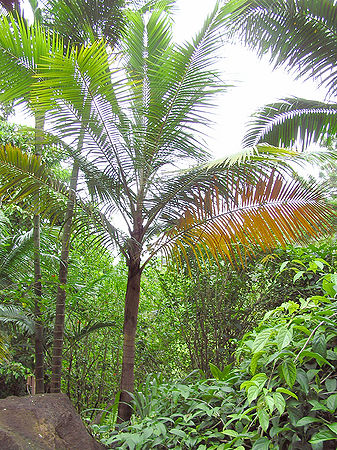
Pronunciation: uh-can-thuh-FEE-nix ROO-bruh
Common Name: Barbel Palm; Red Palm
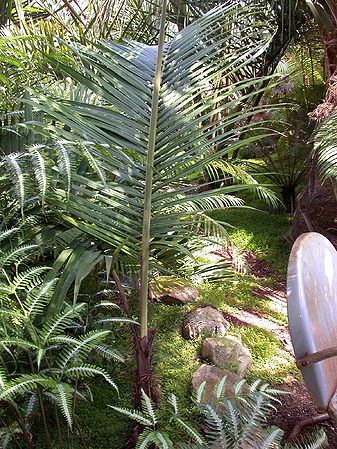
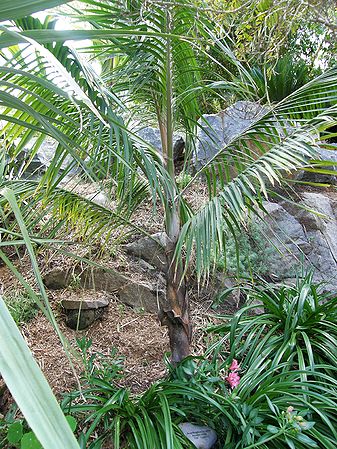
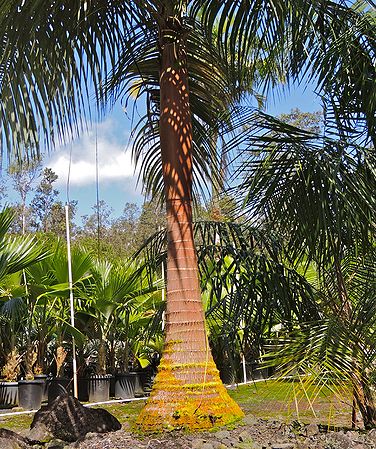
Acanthophoenix rubra is a solitary pinnate palm from the Mauritius and Reunion Islands, south of India and east of Madagascar (about same latitude) that has some surprising cold hardiness, though is still a marginal palm for most of California- does not seem to tolerate long periods of cool very well. No mature palms in California, but it is conceivable it could happen. Less colorful Acanthophoenix crinita much better choice for California. Very ornamental palm in tropics where rust coloration of crownshaft is unique.
|
Appearance and Biology
- Habit: solitary with a crown of 6-10 feather leaves
- Height: 10 feet (60 feet possible in the tropics)
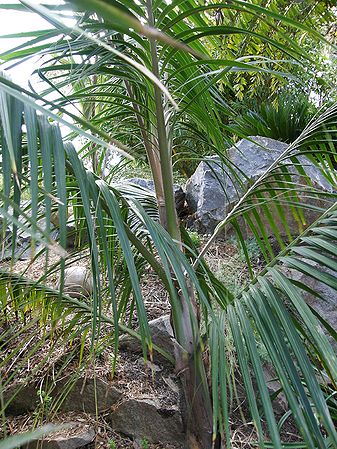
- Trunk: tan, clean, initially spiny but losing spines with age; 4"+ thick
- Crownshaft: 3' barely thicker than trunk and rust colored, moderately spiny though less so with age
- Spread: 4'-6'
- Leaf Shape: pinnate, flat with closely spaced leaflets. Leaves usually upright and rarely reach horizontal without falling off
- Petiole: short and reddish in juvenile plants
- Foliage: green with red rachis in juveniles, yellow in adults
- Reproduction: monoecious
- Inflorescence: pink to purple flowers
- Fruit: 1cm and black when ripe
- Seed: 5-7mm
|
Horticultural Characteristics
- Minimum Temp: 31F
- Drought Tolerance: poor
- Dry Heat Tolerance: very poor
- Cool Tolerance: moderate to poor
- Wind Tolerance: poor unless humid
- Salt Tolerance: unknown
- Growth Rate: very slow
- Soil Preference: rich and well draining
- Light Requirement: shade when seeding and gradual coastal, half day sun as matures (note: no mature palms in southern California)
- Human Hazards: very spiny when young and spines long, thin and very sharp
- Disease or Horticultural Problems: not known
- Indoor?: very poor choice for indoor palm due to safety hazards
|